
Rebel attacks around a town that is one of the centres of the Ebola outbreak in the Democratic Republic of the Congo have left more than 30 people dead over the past few days, complicating the response to the disease.
At least 10 people were massacred in raids on three villages around the city of Beni, in North Kivu, in the early hours of Wednesday morning.
The Allied Democratic Forces (ADF), a militia affiliated to Islamic State, has been blamed for the attacks on the villages of Matété, Mamuli and Kitoho in eastern DRC.
Isaac Kavalami, a community leader from the region, said: “We have provisionally recorded around 10 deaths. Motorcycles and homes were set alight by the ADF rebels. They also kidnapped civilians, the number of whom is not yet known.”
As of Wednesday, 344 cases and 60 deaths have been recorded in the Ebola outbreak in North Kivu, South Kivu and Ituri provinces.
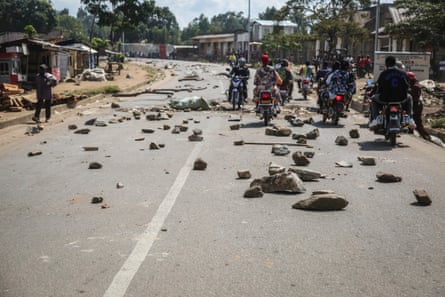
Just before midnight on Saturday, the militia entered Beni, which has been under DRC military administration since 2021.
People were beheaded and others shot in the attack, which caused widespread panic and sent hundreds of people running from their homes into the bush. More than 20 men, women and children, were reported killed and dozens missing, according to witnesses.
Mumbere Sivya, a resident of the Ngandi neighbourhood of Beni, said: “As we were getting ready for bed, we heard people screaming for help. It was an attack carried out by the ADF. We fled our homes in a panic to save our lives. Unfortunately, in the morning we realised that our neighbours had been beheaded.”
The ADF has stepped up its attacks on civilians and the Congolese army in the Beni region. Civil society organisations say about 10,000 civilians have been killed by the armed group since 2014.
The ADF, a loose network of insurgents and bandits, is also accused of committing atrocities in neighbouring Uganda, according to the authorities there.
The military governor of North Kivu said in a statement on Tuesday that three patients confirmed to have Ebola had fled treatment centres in Beni after Saturday’s attacks.
The raids and fear in the communities have complicated efforts to deal with the 17th Ebola epidemic to hit the DRC since the virus was first identified in 1976.
“Ebola kills, but not by decapitation. We are losing loved ones as a result of the ADF’s atrocities. It is a bitter pill to swallow,” said Albert Lusenge, a civil society activist in Beni.
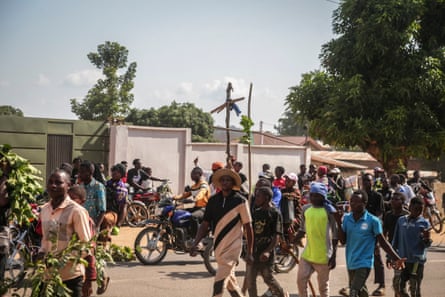
Lusenge has lost 20 family members in attacks attributed to the ADF. In his view, it will be difficult to convince the population to support the fight against Ebola when they are already devastated by the ADF’s activities.
Other community leaders pointed out that people fleeing violence increased the risk of infections spreading.
“The disease can spread from one community to another,” said Lusenge. “We saw that after the attack in Ngandi, the residents fled. During the flight, it is difficult to enforce containment measures. If there are people among them carrying the Ebola virus, that is serious.”
Large-scale government campaigns carried out by the Congolese army between 2005 and 2014 failed to root out the ADF. Another assault on the militia began in 2021, with the Congolese and Ugandan armies still working jointly to track down ADF fighters in North Kivu and Ituri.
It was in response to these campaigns that civilians were targeted, said Reagan Miviri, a researcher at Ebuteli, a DRC-based thinktank.
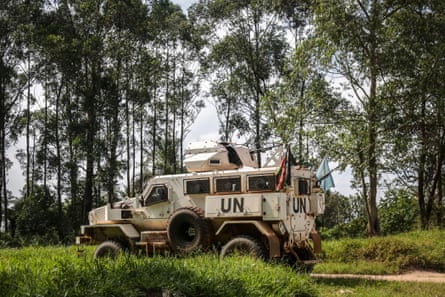
“The killings of civilians serve as a military deterrent because every time these terrorists are attacked deep within their territory, they respond by massacring civilians. This may be a way of forcing a halt to military operations against them,” he said.
“They move in small groups. And these small groups are difficult to detect during operations, which are sometimes conducted from the air. Furthermore, the group operates in a forested region and can easily evade the army’s surveillance.
“We tend to observe that military operations between the Congolese and Ugandan armies are primarily aimed at driving the ADF away from the Ugandan border. Unfortunately, as long as these operations continue, civilians are being killed.”
The Kinshasa government confirmed that the ADF was behind the killings and said it condemned them in the strongest terms.
“In the face of this tragedy, the government reaffirms that the fight against the ADF remains an absolute priority,” the ministry of communication and media said in a statement.
Miviri pointed out that insecurity in the Beni region and elsewhere risked “reawakening the demons” of mistrust towards Ebola response teams and causing unrest, as occurred during the response to the Ebola epidemic between 2018 and 2020, which claimed nearly 2,300 lives.
“It will be difficult to carry out interventions in areas where the ADF operates because healthcare providers will not want to work in such a volatile environment. People may also fail to understand why there is such a major mobilisation against Ebola when there is none to counter the massacres,” Miviri said.
Last week, the World Health Organization’s director general, Tedros Adhanom Ghebreyesus, emphasised that insecurity in the DRC, particularly in Ituri, was seriously hampering the response to the Ebola outbreak. He warned that isolating patients and building community trust were impossible “while bombs are falling”.