Geoffrey Bawa: Architecture for the Senses at Vitra
At the Vitra Design Museum, the exhibition Geoffrey Bawa: Architecture for the Senses explores the dynamic world of the renowned Sri Lankan architect. Born on the island country, Bawa spent much of his early years traveling the world, particularly in Europe. Although tempted to stay in Italy, Bawa returned to his place of birth and decided to become an architect, a move that closely followed Sri Lanka’s independence from British rule.
It could be argued that perhaps Bawa was one of the key spectators of the historical circumstances he found himself in. In the essay, In Time: The Architecture of Geoffrey Bawa, for the exhibition catalogue, Shayari De Silva writes, ‘In the tropical heat and humidity of Sri Lanka, the progression of decay over time is palpable and indefatigable. Bawa realized this early in his career,’ going on to describe how, even in his early works, the architect’s structures responded to the rain and humidity in the country. There’s parallel movement between his work and Sri Lanka’s path toward redefining itself in the face of colonial rule. In his buildings, homes, and hotels, there’s a certain gaze that Bawa places on his country, one that is watching how the nation shifts in response to political factions, foreign influence, and a desire to move forward.
‘tropical modernism’ and its European history
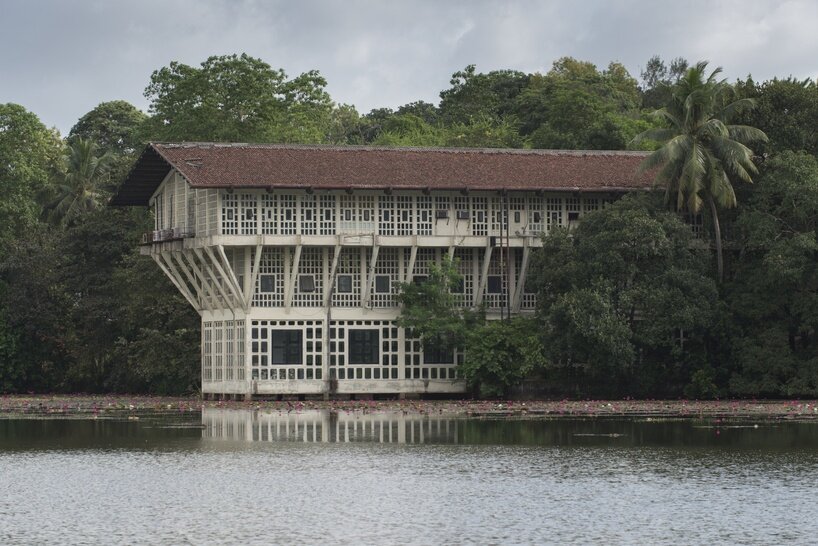
Bawa (1919–2003) is widely considered a steward of the ‘Tropical Modernism’ movement, which came to blend traditional forms indigenous to the country with the prevailing aesthetics of modernism that were first popularized in the 1920s during the era of the Bauhaus – the exhibition at Vitra gives nuance to this. Pre-liberation, Sri Lanka was populated with hulking English-style colonial buildings, recognizable by their extremely ornate decoration and light-colored facades—a style imported by the occupying power. The wake of their withdrawal left space for a new kind of architectural style.
It should be noted, though, that Tropical Modernism wasn’t imported to Sri Lanka, or any of the other countries in the so-called ‘Tropics.’ It was an adaptation of the modernist architectural style first popularized in Europe and diffused throughout these countries by Maxwell Fry and his wife Jane Drew. The V&A adeptly notes that ‘The Tropics’ as a has its own problematics as it was, ‘a broad geographical zone spanning the equator and covering 40 percent of the world’s surface. It was a colonial definition that encompassed most of the territories of the British Empire, but ignored regional variations in climate as well as local cultures and traditions.’
Bawa’s contribution to the movement
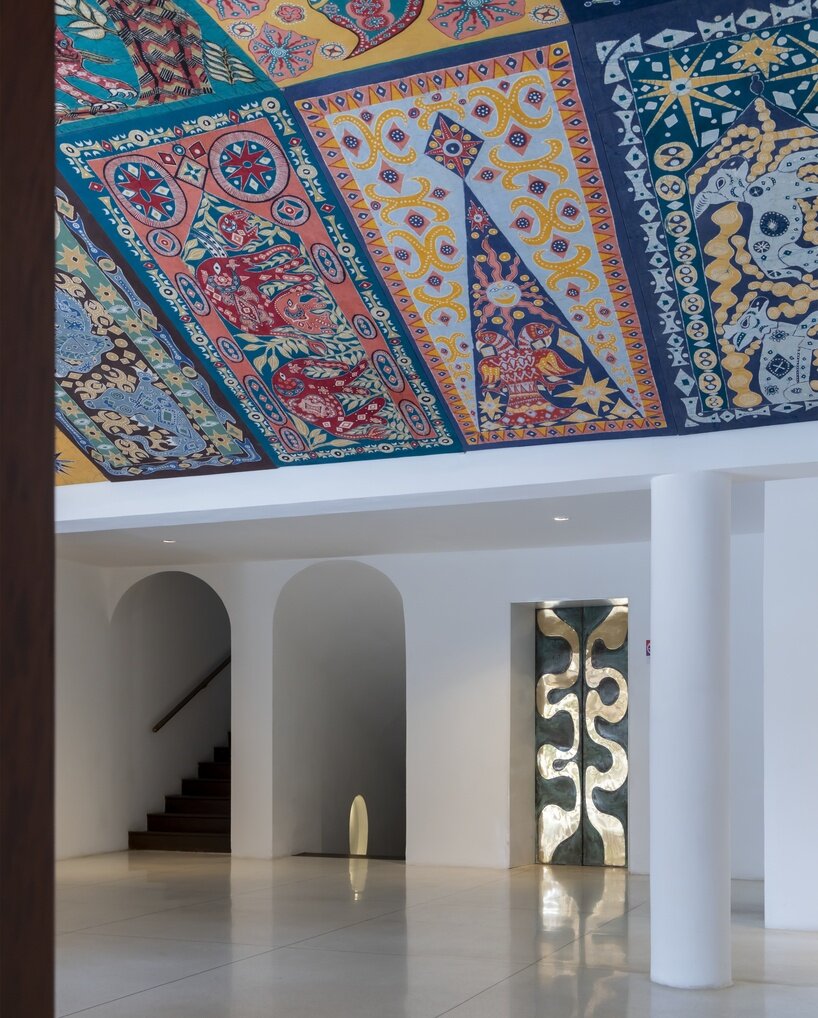
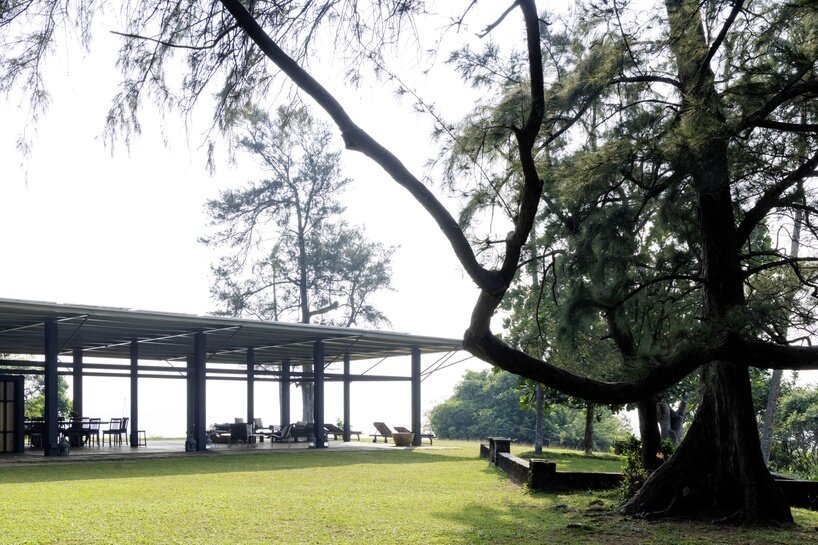
In Sri Lanka’s new post-independent state, the architect took the qualities that worked, like rejection of Eurocentric ornamentation, while furthering this approach with methodologies that worked for his geographic context. A notable thread throughout the exhibition is Bawa’s continual collaboration with creatives who practiced and disseminated local craft, like Ena de Silva, Laki Senanayake, and Barbara Sansoni. Throughout the exhibition, colorful batik works can be found, echoing their presence in Bawa’s work, like in the expansive, technicolor ceilings of the Bentota Beach Hotel.