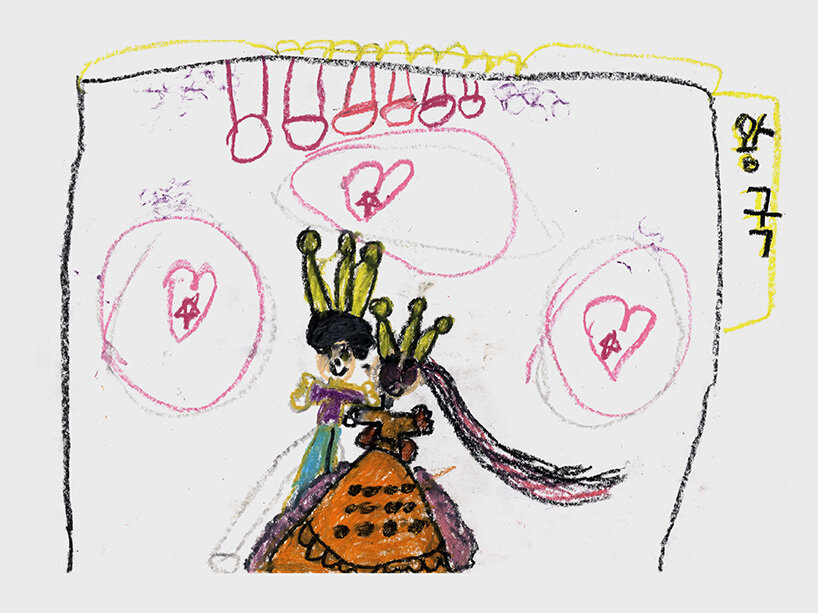
Yeondoo Jung’s Wonderland brings children’s drawings to life
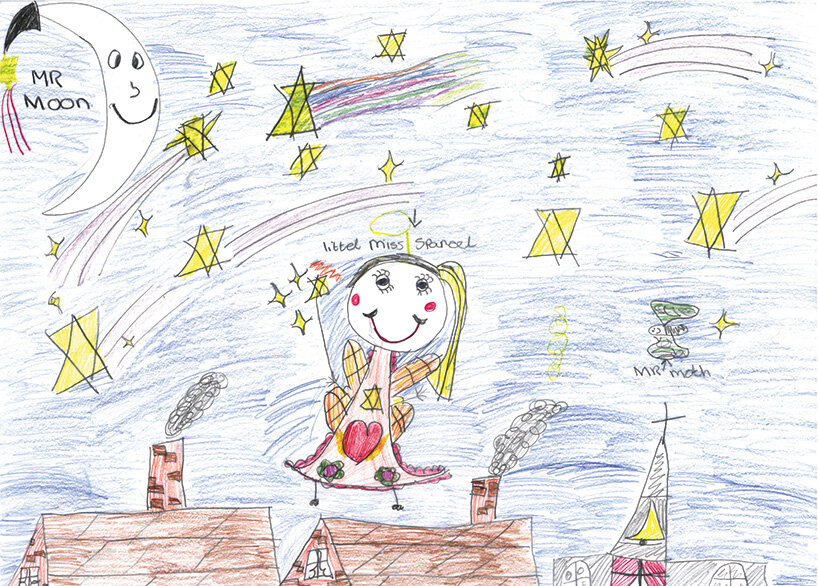
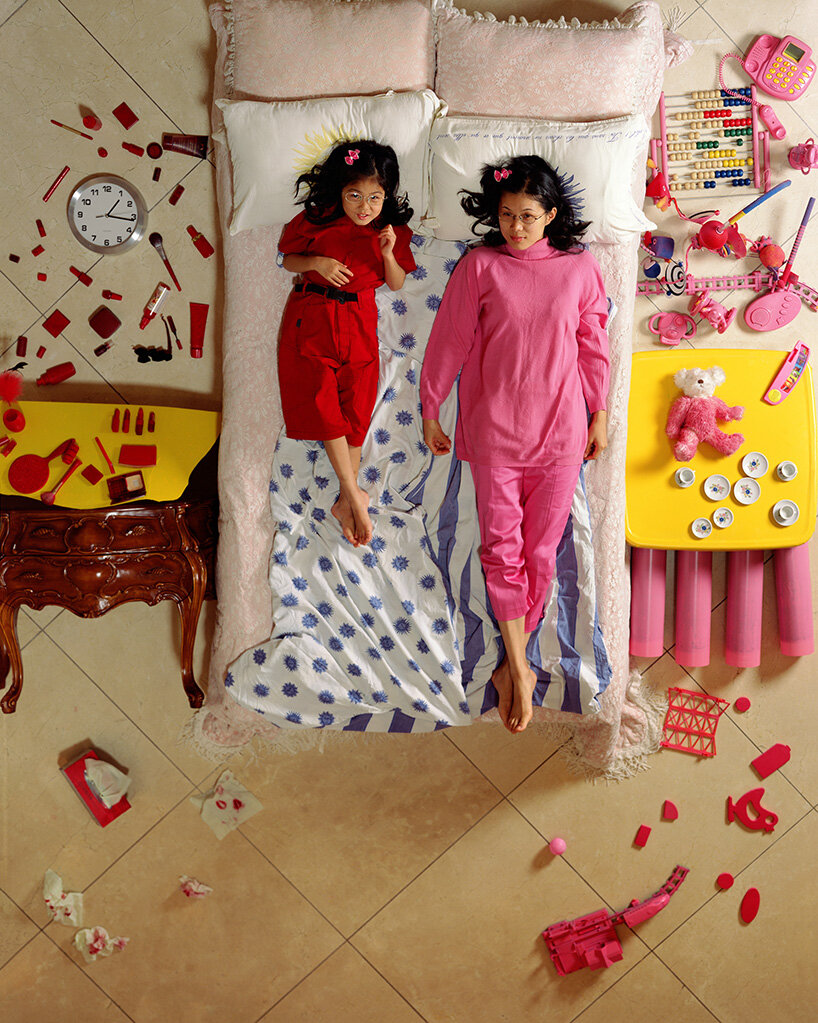
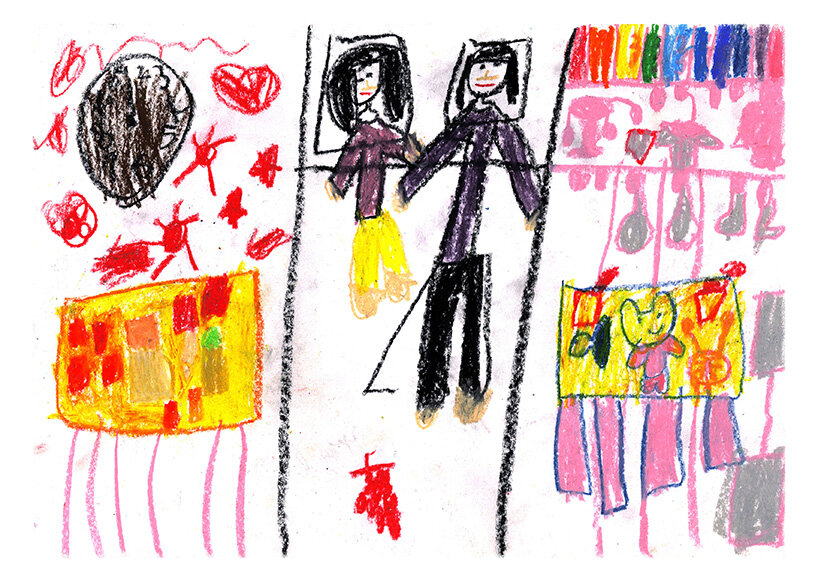
Korean artist Yeondoo Jung collected 1,200 drawings from children between the ages of five and seven, selecting 17 to reconstruct as large-format photographs. Working with teenage models, costume and prop designers, and locations across Seoul, the artist carefully translated the imagined worlds from sketches into physical scenes, including details that could not exist according to the usual rules of photography. Twenty years later, this painstaking process feels especially relevant as images that once required sets, costumes, models, and physical tricks can now be created instantly. ‘When producing the work back in 2004, digital cameras certainly existed, but I intentionally insisted on using a 4×5 inch large-format film camera,’ Jung tells designboom. ‘This was to create the most theatrical and hard-to-realize scenes—for instance, using a trampoline to capture the exact moment models floated in mid-air to recreate a drawing where gravity is ignored.’
Jung wanted to stay as close as possible to the children’s drawings, even when their ideas were difficult to reproduce in real life. Turning these into photographs meant working out how to make those details happen in front of the camera. Some required finding the right location, while others involved costumes, props or a trampoline. The photographs keep the strange logic of the original drawings, but bring it into the real world.
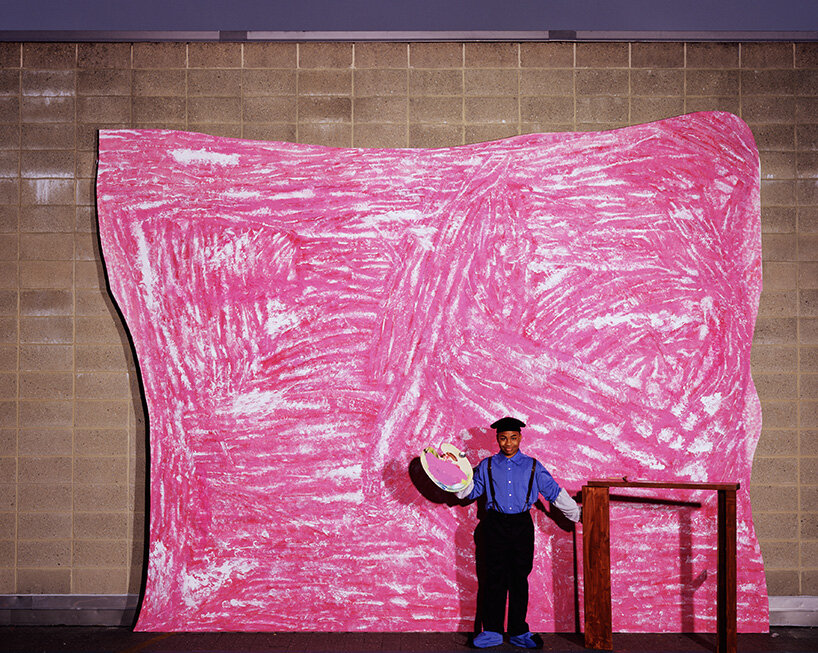
from 1,200 drawings to 17 photographs
Over four months, Jung collected 1,200 drawings from children between five and seven, from which he selected 17 to recreate as photographs. He chose teenagers to play the characters because, as he explains, ‘they visually convey the bodies of adults and at the same time, their minds are more similar to that of the child that created the original drawings.’
Turning the drawings into photographs involved a team of fashion designers, prop designers, makeup artists and teenage models, all working out how to translate the children’s simple images into real spaces. ‘Fashion designers, prop designers, makeup artists, and teenagers gathered around a 6-year-old’s drawing, holding serious planning meetings for hours,’ Jung shares with us. They had to decide everything from the fabric of a costume to how a piece of furniture drawn on a flat page could be made in three dimensions.
Color was another part of the process. Jung followed the colors chosen from a 12-color crayon set and went to Seoul’s Dongdaemun fabric market with a costume designer to find matching fabrics to stay as close as possible to what the children had drawn, without trying to make the images look more polished or realistic.
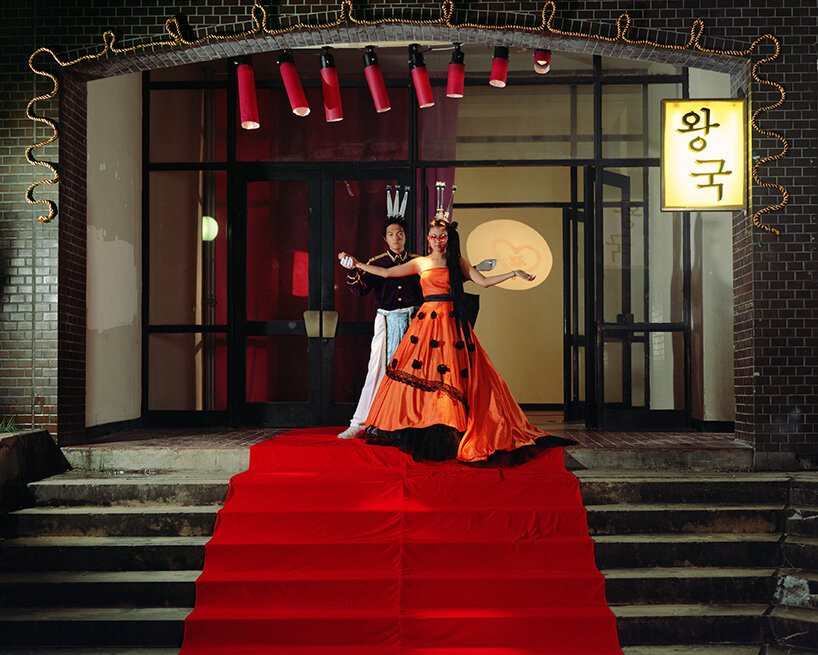
The same attention went into details that could easily be missed. In one seven-year-old girl’s drawing of Cinderella, the palace carries a sign reading Kingdom, which Jung connects to the amount of signage the children see around Seoul. ‘Unlike written words, children’s observations of society are directly revealed through their drawings,’ the South Korean artist says. ‘This reflects a dimension of reality that is completely different from the knowledge and understanding conveyed through text.’
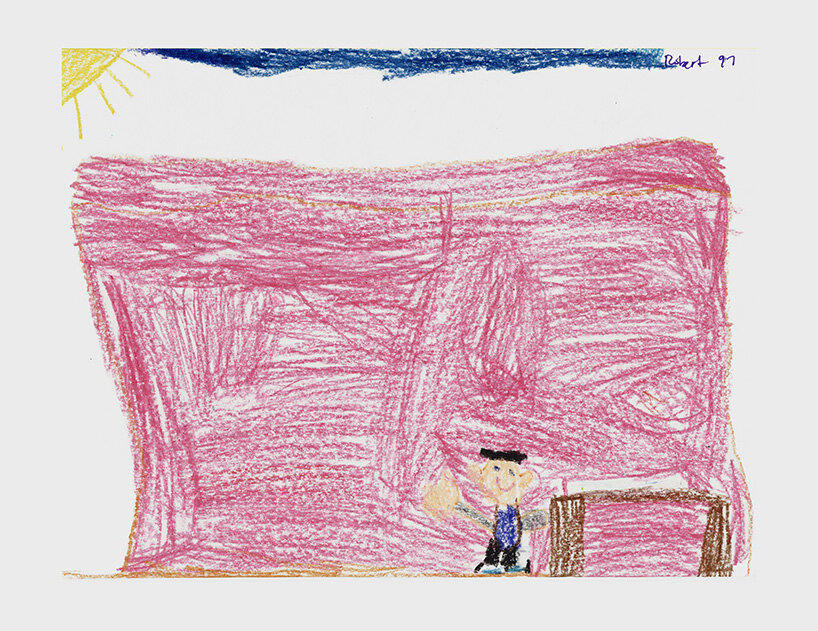
when fantasy exposes the city
In some cases, the drawings may reveal things about the world the children see around them. In Rich and Poor, for instance, the two houses are only slightly different in size, while a wealthy person hands a lump of gold to a poor person. Recreating the drawing as a photograph forced Jung to look at how differently wealth and poverty are actually represented in Seoul, where wealthy residents live in high-rise apartments while poorer communities often occupy homes in areas marked for redevelopment. ‘If we were to photograph this, what kind of image would it become?’ Jung asks. ‘We would definitely have to find a location where both a wealthy house and a poor house fit into a single frame.’
The photographic medium forces Jung to find an actual relationship between the spaces represented abstractly in the drawing. The difference between rich and poor can no longer remain a symbolic difference in scale. ‘In the reality of Seoul, the wealthy live in high-rise apartments, while the poor live in redevelopment zones,’ he continues. ‘They live in houses they cannot even afford to repair, in areas that will soon be demolished to make way for new apartments.’
The photograph brings another layer to the original drawing, revealing how much of the children’s everyday surroundings has made its way into their imagined worlds. What looks like a simple story about two houses and a gift of gold also reflects the realities of housing and inequality in Seoul. ‘The realization that a child’s innocent drawing actually deals with the heavy reality of metropolitan expansion and housing culture is only possible through the medium of photography,’ the visual artist highlights.
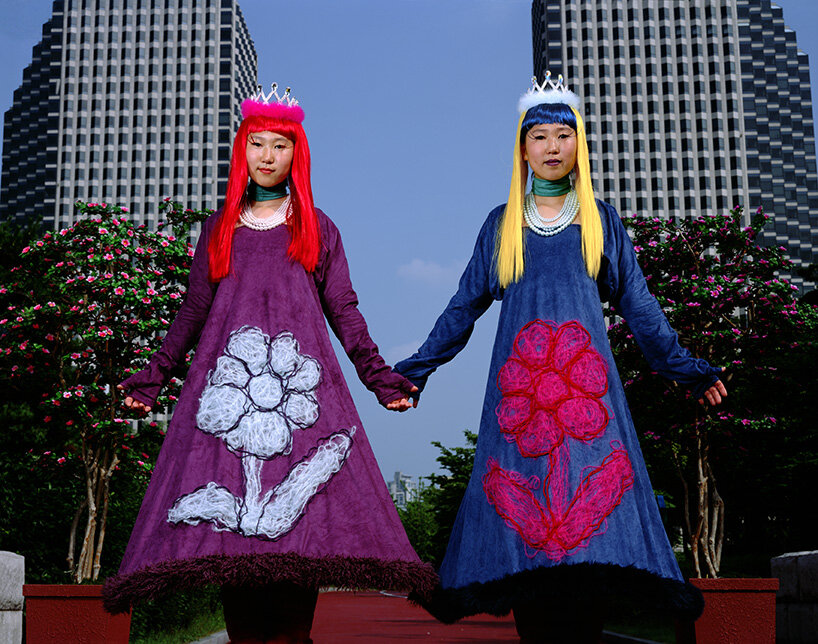
photography after the digital turn
When Jung made Wonderland in 2004, he chose to work with a 4×5-inch large-format film camera, even though digital photography was already available. He wanted to make the scenes as physically real as possible, which meant finding practical ways to recreate things that could only exist in a child’s drawing.
That approach feels different today. ‘Times have changed, and now, by simply inputting a few lines of text into an AI program, one could easily generate an image of teenagers floating in the air,’ Jung comments. For him, this is part of why Wonderland has drawn attention today, as the effort that went into making each photograph is now much harder to separate from the image itself. ‘I believe the reason the Wonderland series is receiving renewed attention recently is, ironically, because of the immense physical effort and the highly inconvenient methods chosen to take a single photograph,’ he reflects.
The difference is also in the way the images were made, with people, materials, locations and physical tricks all coming together to reproduce something that began as a child’s drawing. As Jung puts it, ‘Children’s ideas do not come from text (as they haven’t yet learned to write), but rather from their sharp ‘’observation,’’ much like looking at the world through a camera lens.’
two ways of seeing
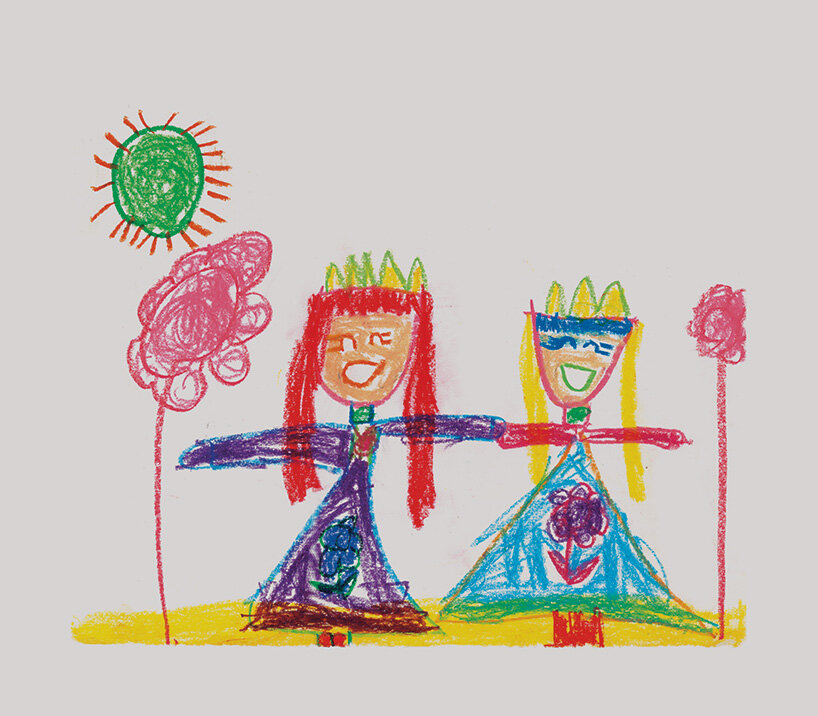
The difference between the drawings and the photographs is part of what makes Wonderland work. The children could ignore gravity, perspective and proportion, while Jung had to find a way to make those ideas work in front of a camera. The teenagers, costumes, props and locations became part of that process.
‘The medium of photography traditionally captures a resemblance of reality on a flat surface through a lens,’ Jung notes. He describes the making of the photographs as a group of people gathering around a child’s drawing and trying to work out how each part could be made real.
For the artist, the drawing and the photograph are meant to be seen together. ‘The children’s drawings and the photographs interpreting them form a pair, creating a single artwork,’ he suggests. The first thing viewers might notice is how closely the photograph follows the drawing, but looking longer reveals the differences between the two. That gap between the original drawing and the finished photograph is where much of the work’s meaning sits. What begins as a child’s simple idea becomes something more complicated once it is placed in the real world.
the weight behind the wonder
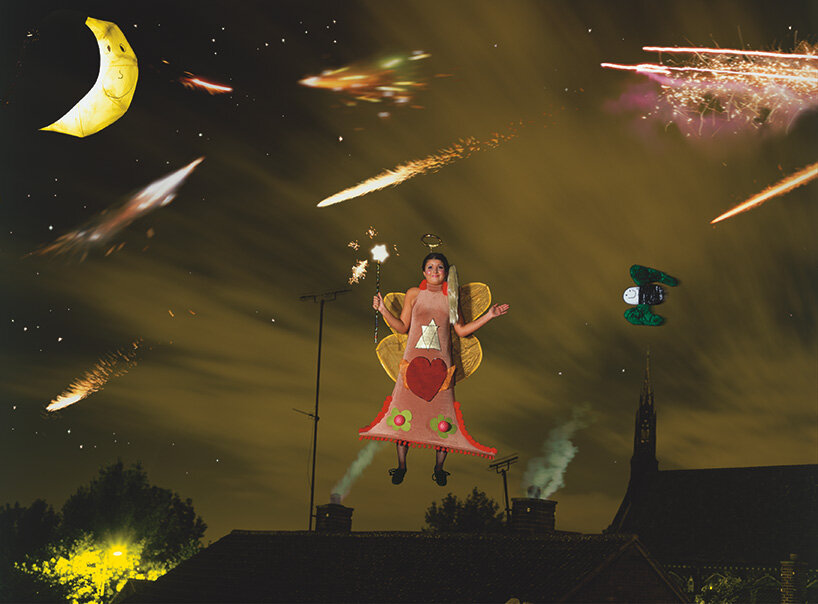
Yeondoo Jung describes Wonderland as one of the lightest subjects in his body of work. ‘The Wonderland series deals with what appears to be the lightest subject matter among my works,’ he tells us. ‘Therefore, I tried to give it as much weight and fidelity as possible through the highly realistic medium of photography.’
That balance is still visible in the photographs. A person floats above the ground, a palace carries a Kingdom sign, and houses sit together in ways that would be difficult to find in the real city. At the same time, the photographs bring these scenes back to Seoul, with its streets, buildings, signs and social realities. For Jung, the drawings and photographs remain closely connected. ‘The children’s drawings and the photographs interpreting them form a pair, creating a single artwork,’ he says. Looking at them together, the differences become as important as the similarities, showing what happens when a child’s way of seeing is brought into the adult world.