
A report published in September by the Vanderbilt Policy Accelerator revealed that almost half of the outdoor concert venues operated by Live Nation around the country are owned by state or local governments, which contribute significant funding to the corporation’s proceedings. The Vanderbilt report expresses concern about the use of taxpayer money to fund Live Nation’s harmful monopoly on the live music industry.
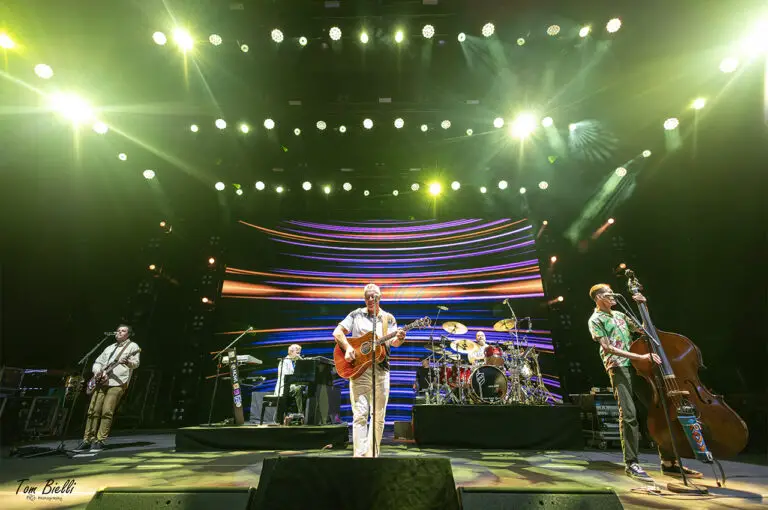
In April, a federal jury found that Live Nation Entertainment had illegally monopolized ticketing and live event markets at an international scale. In an effort to understand how Live Nation became so dominant, the authors of the Vanderbilt Policy Accelerator report surveyed all 64 of Live Nation’s outdoor amphitheaters and stadiums in the United States. They found that 30 of these 64 venues are government-owned buildings with Live Nation operating as a long-term contractor. Of these 30 venues, four are located in or near New York State.
Live Nation operates both of the two major outdoor entertainment venues in the New York City metropolitan area. The first of these, the PNC Bank Arts Center, is located in Holmdel, NJ and has a capacity of 17,500 people. This venue, though owned by the state of New Jersey, is operated by Live Nation. The two parties entered a 25-year lease in 2017, with Live Nation paying the state approximately 10% of revenue and both parties contributing equal amounts of funding for venue renovations. Live Nation also receives 50% of PNC Bank’s payments for naming rights, despite not owning the venue.
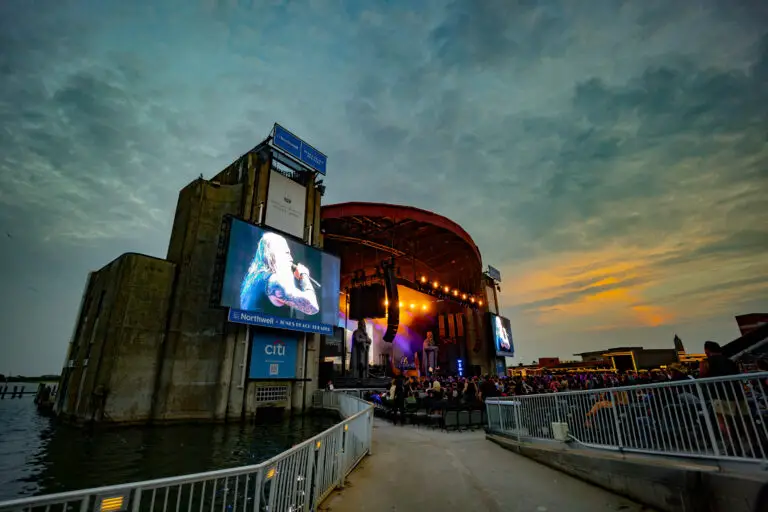
Wantagh, a hamlet on Long Island, is home to the second of the two major outdoor venues in New York’s metropolitan area. Northwell at Jones Beach Theater seats 15,000 audience members. Like the New Jersey venue, Jones Beach Theater is state-owned but operated by Live Nation. The terms of this agreement are more favorable for New York State than the above terms are for New Jersey: Over the course of a 20-year contract begun in 2019, Live Nation pays New York State $7.5 million annually, a price that increases with the rate of inflation. This is less than half of what New Jersey receives for the Holmdel venue.

Unlike the venues above, Syracuse’s Empower Federal Credit Union Amphitheater at Lakeview is owned by its county rather than the state. Onondaga County hired a private company, SMG, to operate the venue, and SMG in turn hired Live Nation as concert promoter with an exclusive booking agreement. The terms of SMG’s contract with Live Nation are not publicly available, but Onondaga County’s comptroller found that New York State contributed financial subsidization for concerts at the venue.
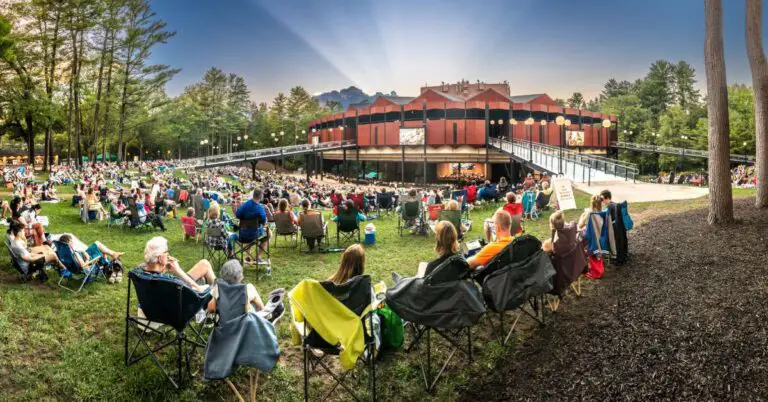
Saratoga Performing Arts Center (SPAC), a nonprofit organization in Saratoga Springs, operates a 5,200-capacity amphitheater by the same name. This venue, like Jones Beach Theater, is owned by New York State. According to the Vanderbilt report, SPAC and Live Nation have a contract giving Live Nation “the sole right to book, co-promote, co-produce, and co-present all touring and professional events at the venue.” For this privilege, Live Nation pays SPAC a venue license fee and a percentage of revenue. State funding has also contributed to SPAC, including a new construction project to improve the safety and utility of the venue.
The Vanderbilt Policy Accelerator report offers a number of alternatives to the current model, which gives Live Nation control of these venues to the detriment of local independent music. One solution is what the authors call the “outsourcing with conditions” model, in which state government contracts with a private entity to operate a venue. This is much like the current arrangements many states have with Live Nation, but with certain protective conditions that are notably absent in the current model. For example, the authors advocate for opening these venues’ operation contracts to competitive bidding, as well as booking artists without regard to their Live Nation affiliation.
The second solution these authors propose is the “public do-it-yourself model,” in which the city maintains ownership and operation of the venue, working with a public nonprofit corporation. This nonprofit corporation would collaborate with a variety of promoters and artists and would ensure that revenue from the venue’s events remains in the local community.