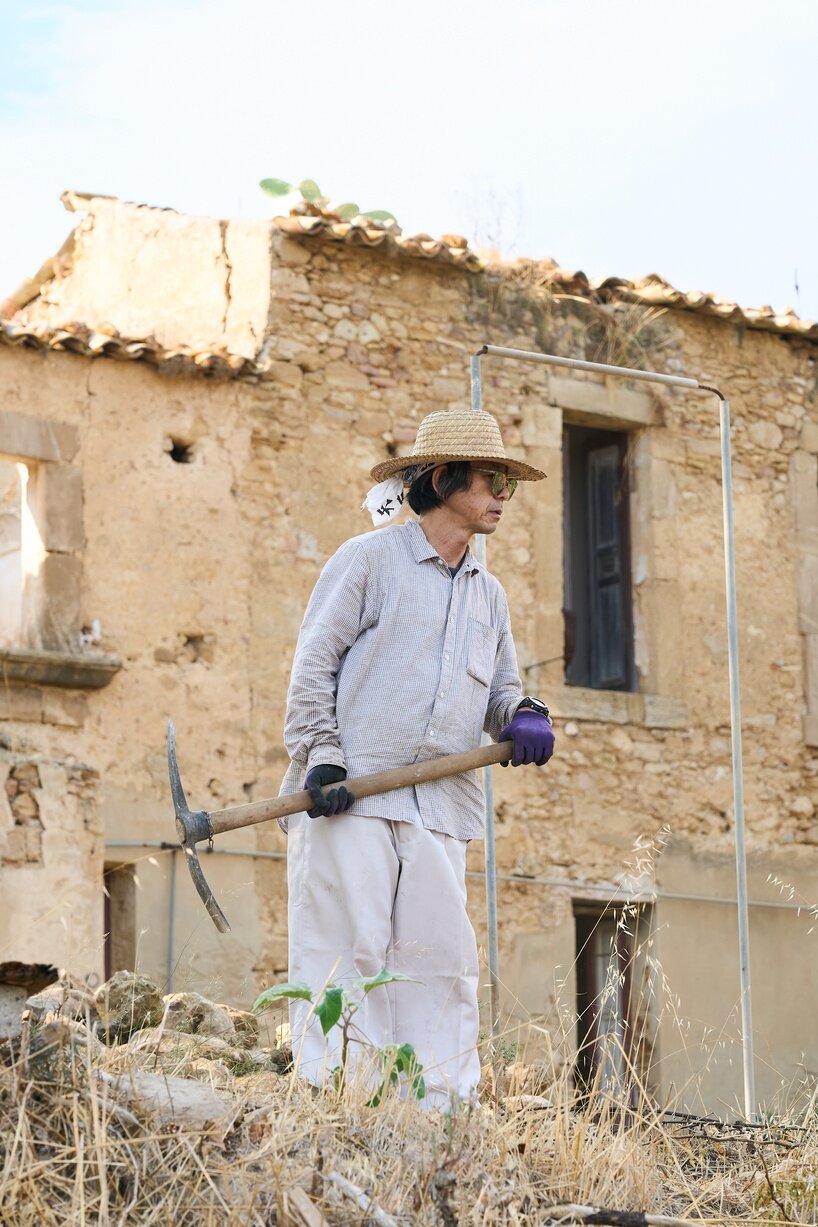
bosco colto campus co-director marco navarra
In and around the forests of Santo Pietro, near Caltagirone in southeastern Sicily, is Bosco Colto, the ecological regeneration project established in 2022 by Makramè APS. Through interdisciplinary programming, the organization explores the Bosco di Santo Pietro area and develops new ways of inhabiting and caring for the territory. In the summer of 2026, it invited guests and community members to participate in its annual Bosco Colto Campus, a summer session of workshops and activations that takes place across the village of Santo Pietro.
Titled Thinking with Animals, this year’s edition welcomed the likes of Yoshiharu Tsukamoto of Atelier Bow-Wow, Food Hack Lab, and other practitioners in academia, design, and architecture. Through experiments in architecture, agroecology, ceramics, sound, and spatial practices, the program explored environmental justice through a nonhuman lens. In conversation with designboom, Marco Navarra, who co-directs the program with Dario Felice, Beatrice Fontana, and Antonio Scarponi, talks about the organization’s growth and what was cultivated—both literally and philosophically—during Thinking with Animals.
Thinking with Animals and a New Approach to Architecture
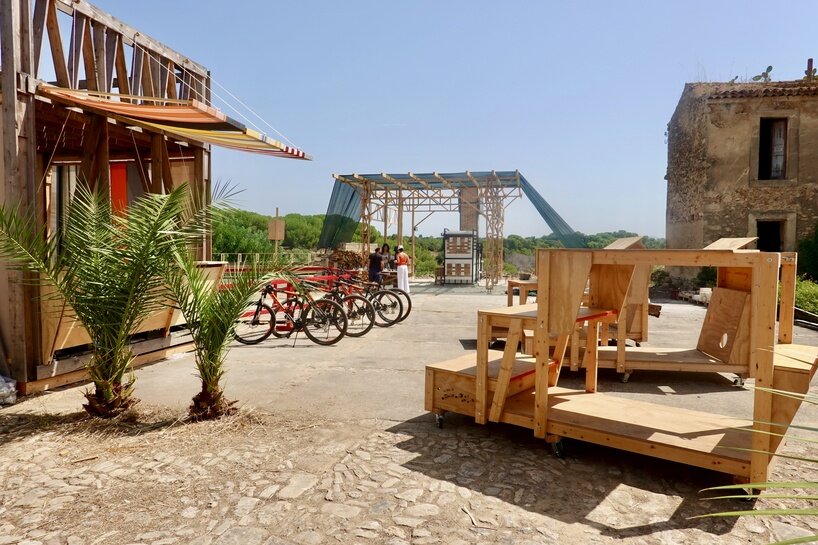
From the end of July through the first week of August, Bosco Colto Campus featured Fabio Ciaravella’s workshop Order of the Oaks of Santo Pietro, which focused on the study of the ancient relationship between the forest and the city. It also brought to life a hybrid train kiln, a wood-fired kiln for experimental ceramics. Additionally, the program engaged with audio, digital, and culinary modalities for interacting with the world around Santo Pietro.
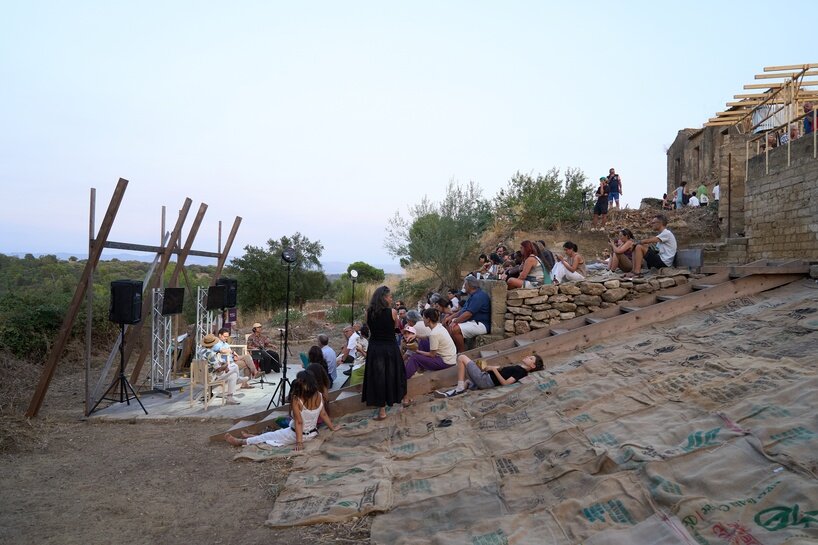
Navarra comments on how the framework of Thinking with Animals unified these activities by ‘[providing] an opportunity to experiment in practice with a shift in perspective away from the anthropocentric framework that has characterized traditional approaches to architecture.’ He remarks that the Campus, a nearly ten-day event, ‘became a living research tool, where design was transformed from a mere formal exercise into a situated practice, capable of embracing the unexpected, other presences and the logics of the non-human world as an integral part of the process.’
on designing spaces shared with other species
The name of its governing organization, Bosco Colto, plays on the Italian words bosco (woodland or forest) and colto (cultivated or cultured). These fundamental principles were further manifested in Thinking with Animals, with Navarra emphasizing that ‘Designing spaces shared with other species means, on the one hand, recognizing one’s own limits—the limits of humankind—and establishing them as the starting point for the design; on the other hand, it means simultaneously exercising a great capacity for listening and imagination.’
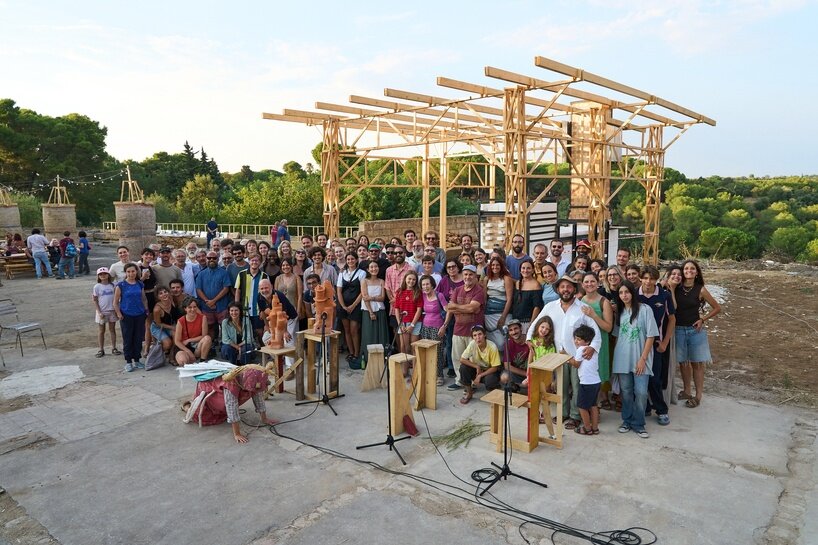
Sicilian Satoyama with Yoshiharu Tsukamoto
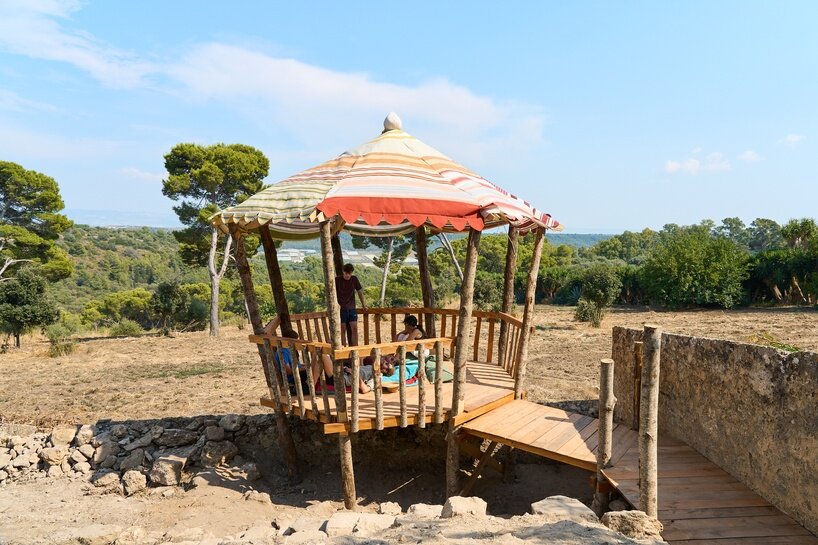
A standout workshop during the late-summer program was Yoshiharu Tsukamoto’s Sicilian Satoyama, in which the group participated in the collective construction of the Zucca Gazebo and Mulberry Canopy, two permanent installations on the site. Navarra explains the concept: ‘Satoyama is the traditional Japanese agricultural landscape, where different forms of land use coexist, within a mosaic-like structure that brings together woodland and rice paddies. This balance is made possible by a social system that ensures its care and management over time.’ Reflecting on the workshop, he adds that ‘Tsukamoto’s team experimented with a different way of applying these materials in construction, to create more opportunities for utilizing local resources and to build something within this network of elements that make up a Sicilian Satoyama.’
Navarra remarks on the success of adapting this concept to the Sicilian landscape, saying that ‘the Satoyama model can be replicated and adapted to the Boschi di Santo Pietro area, which also features a mosaic structure composed of agricultural landscapes and edges of an ancient forest…. Of course, Sicily has historically developed certain agricultural practices similar to Satoyama, but it has been particularly valuable to link Bosco Colto’s activities to the Satoyama revitalization actions that Tsukamoto is carrying out in Japan.’