
the 1970 prototype shows a wankel engine, orange fiberglass body and houndstooth interior as it heads to auction with RM sotheby’s.
kat barandy November 20, 2026 4 min
a once-unbuyable C 111-II gullwing heads to auction
Mercedes-Benz is preparing to auction its 1970 C 111-II experimental supercar in Paris on February 3rd, 2027, the first time one of its legendary C 111 prototypes will be offered for public sale. The orange, wedge-shaped coupe is expected to fetch more than €25 million through RM Sotheby’s.
When the C 111 debuted in 1969, prospective buyers reportedly sent blank checks to Mercedes-Benz in hopes of securing one. The company kept the cars for its experimental program, and a production version never followed.
Only 17 examples were built across the C 111 generations, with 13 surviving today. The example heading to auction, known internally as Car 33, retains its original four-rotor Wankel engine.
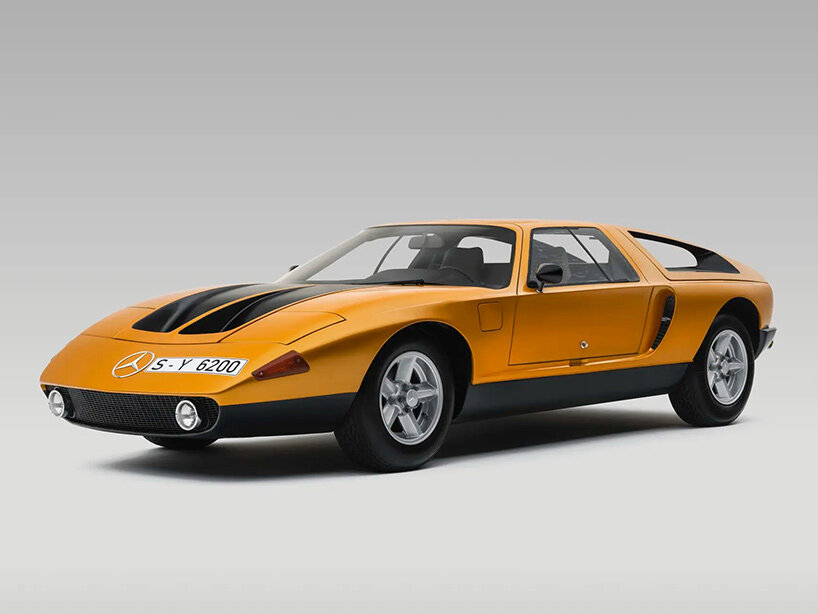
the futuristic orange gullwing of 1970
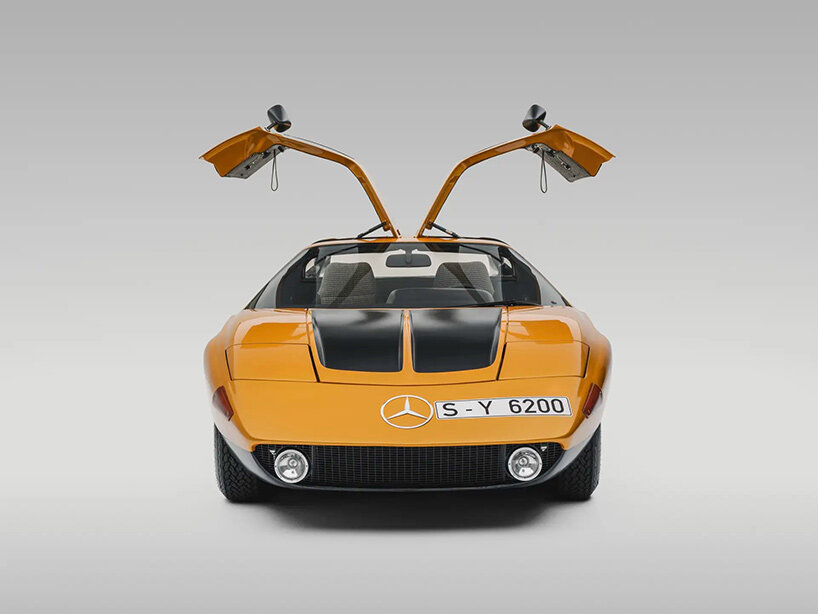
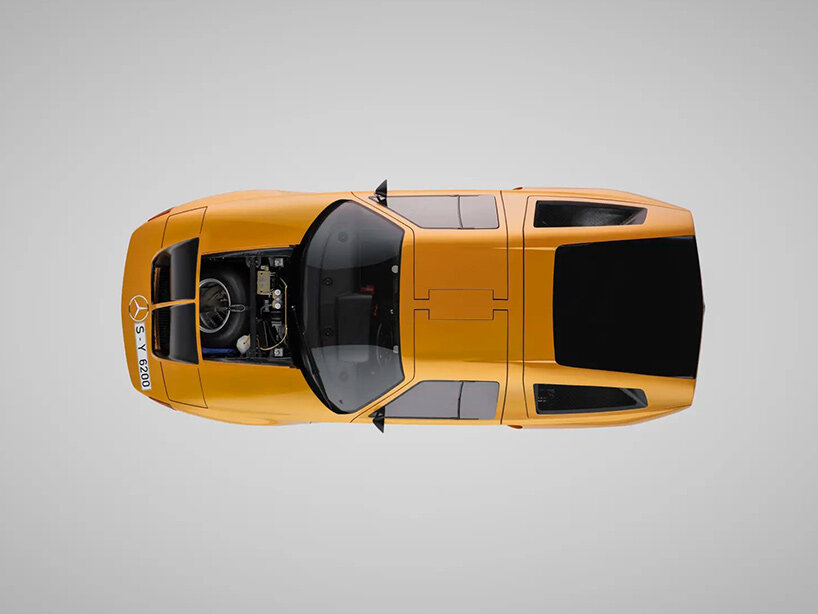
The Mercedes-Benz C 111-II made its debut at the Geneva Motor Show in 1970, six months after the original prototype appeared in Frankfurt. Its sharply sloping nose, broad rear shoulders and gullwing doors gave the two-seater a radically different appearance from Mercedes-Benz’s production cars of the period.
Designers Peter Pfeiffer and Joseph Gallitzendörfer developed the original form under the styling project management of Bruno Sacco. The team used an early computer program called ESEM to calculate structural loads, which accelerated chassis development by approximately six months.
The body was constructed from glass-fiber-reinforced plastic and finished in a metallic orange called Weißherbst, named after a German rosé wine. At just 1.12 meters (44 inches) tall, the C 111-II had the proportions of a racing car, with a complete interior upholstered in grey-and-white houndstooth.
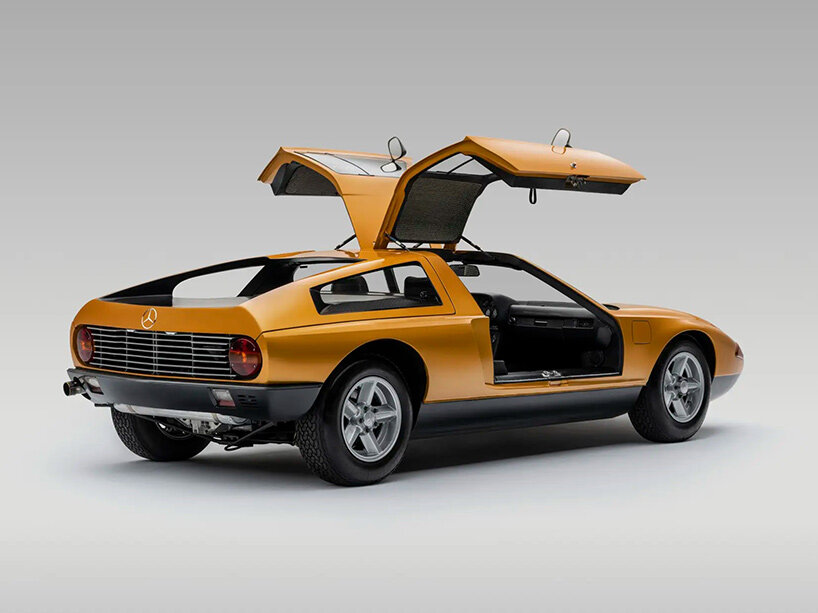
a four-rotor wankel engine built for 186 mph
Behind the cockpit, Mercedes-Benz installed a 2.4-liter Wankel engine with four rotating combustion chambers in place of conventional pistons. The experimental unit produced 350 horsepower at 7,700 rpm, delivered through a five-speed manual transmission.
Weighing about 1,240 kilograms (2,734 lbs), the C 111-II could accelerate from 0 to 100 km/h in 4.8 seconds and reach 300 km/h, or around 186 mph. The prototype’s performance made it among the fastest sports cars of the early 1970s.
Sadly, Mercedes-Benz eventually abandoned the rotary engine as fuel consumption and emissions requirements posed challenges. Plans for production ended in 1971, although the C 111 program continued with later diesel-powered experimental vehicles.
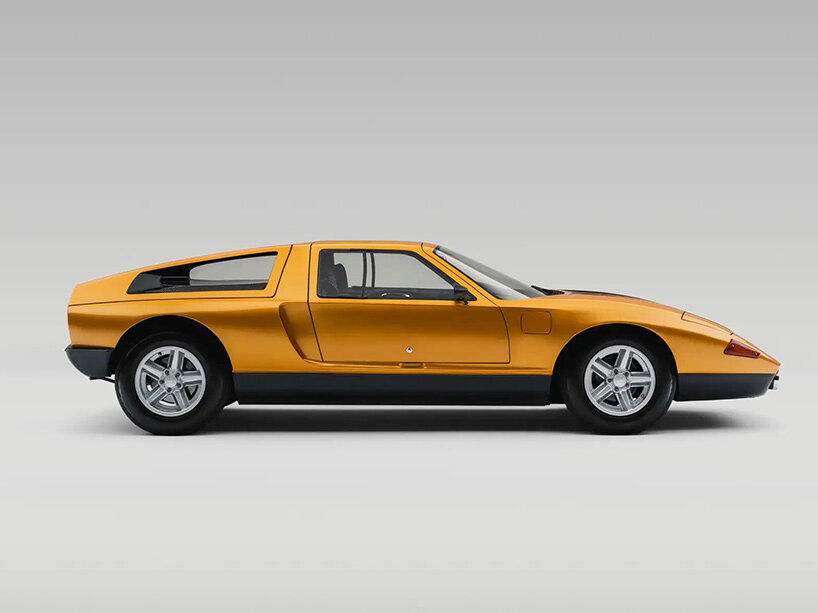
from the hockenheimring to the auction block
Car 33 joined Mercedes-Benz’s experimental fleet in August 1970 and underwent high-speed testing at the Hockenheimring the following year. Among the program’s stranger experiments was a test by development chief Rudolf Uhlenhaut, who reportedly placed butter in the luggage compartment to see whether it would melt during driving.
After decades in the company’s collection, Car 33 became a permanent fixture at the Mercedes-Benz Museum in Stuttgart in 2006. Mercedes-Benz Classic returned the prototype to running condition in 2024, overhauling its original powertrain while preserving the exterior finish and interior patina. It subsequently appeared at Pebble Beach in California.
The car now heads to RM Sotheby’s Paris auction with just 24,766 kilometers (15,389 miles) recorded on its odometer. Proceeds will support the Mercedes-Benz Museum 2.0 project, while the company has committed to retaining its remaining C 111 prototypes for at least another 25 years.
your own online design shop — no sales commission collected