
with its exposed mechanism and variable playback speed, the EP/BC–1 brings a hands-on approach to digital music.
kat barandy November 24, 2026 3 min
CDs spin out in the open
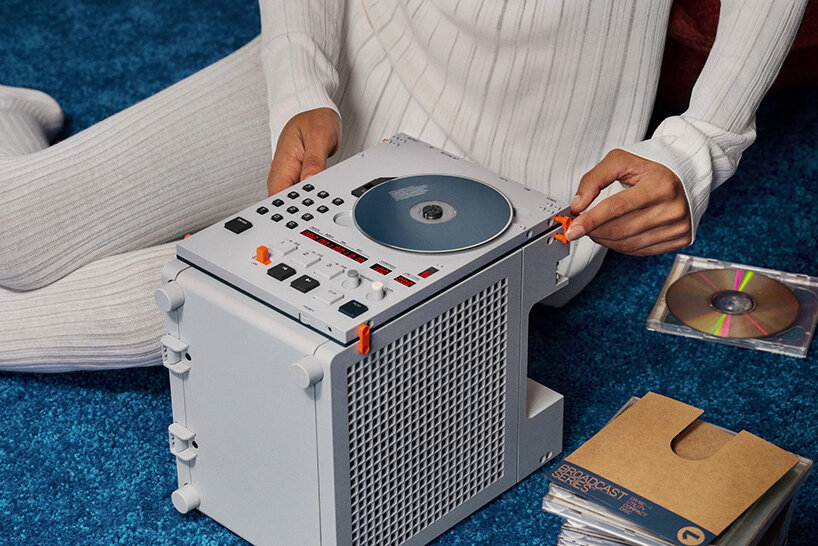
Swedish electronics company teenage engineering introduces its first-ever CD player, the EP/BC–1, with a design that leaves the spinning compact disc entirely exposed. The device takes the form of a slim rectangular deck whose physical controls recall the professional audio equipment once found in radio broadcasting studios.
Without a lid or a retractable tray, the player takes on something of the character of a turntable. The graphics printed onto each CD become part of the product design, and the reflective surface of the disc catches the light as it rotates. Even the simple gesture of changing an album takes on a different quality when the mechanism is out in the open.
Released on November 20th, 2026, the EP/BC–1 marks the debut of teenage engineering’s Broadcast series, a new family of audio equipment developed around older music formats and their place within contemporary sound systems.
a CD player with the controls of a DJ deck
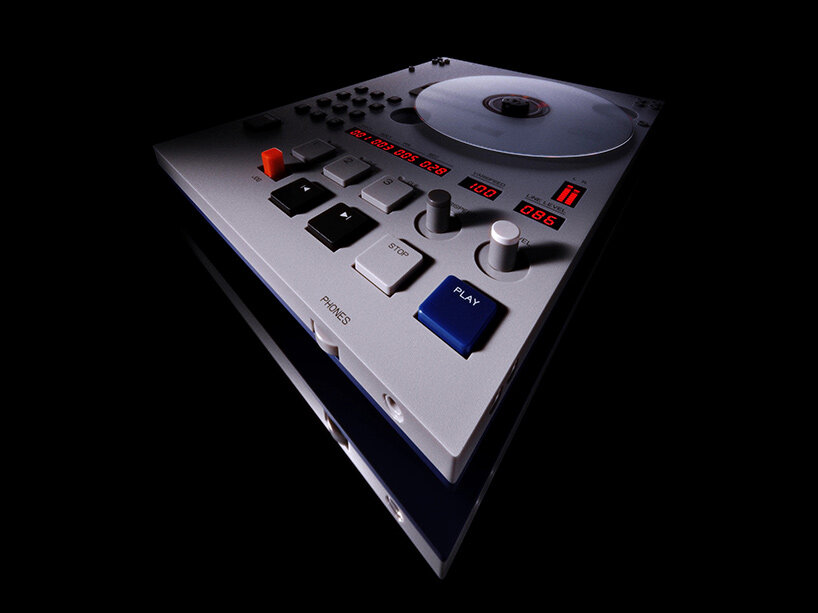
Across the face of the EP/BC–1, the team at teenage engineering arranges a series of tactile buttons alongside red digital displays and an orange power switch. A numerical keypad lets listeners enter a specific track number or jump to a precise moment within a recording, while a small jog stick enables them to search back and forth through the music.
One of the more interesting features is a varispeed dial that adjusts playback between 50 and 150 percent of its original speed. Users can also assign cue points throughout a recording and return to them at the touch of a button.
With an integrated beat detection system, the device can synchronize external music equipment to the tempo of a CD. There is a creative dimension to these functions: an old album can become source material for an entirely new composition, and a collection of CDs can double as a library of samples for electronic musicians.
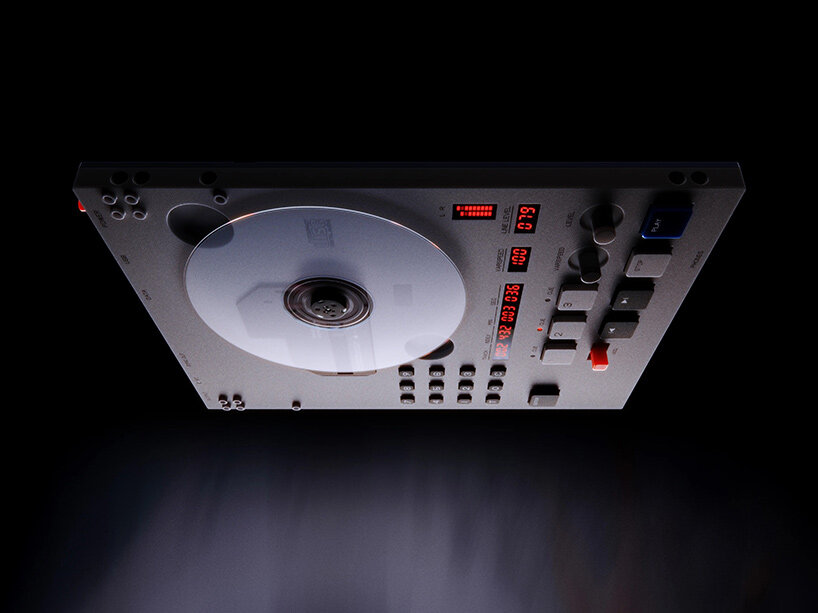
bringing the compact disc into contemporary sound systems
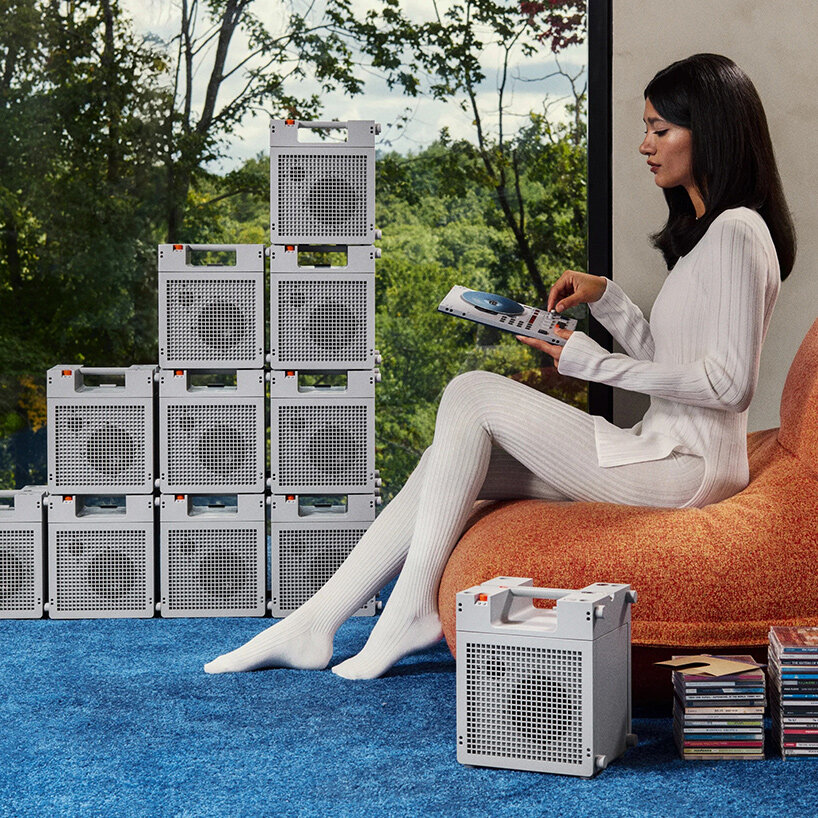
The Swedish design team equips the player with Bluetooth and Auracast technology, through which a single disc can broadcast audio to multiple compatible speakers. The unit also docks directly onto teenage engineering’s K.O.–AMP 35, forming a compact, portable sound system with approximately six hours of playback from the player’s rechargeable battery.
Listeners can transfer tracks from their CD collections to a USB drive as uncompressed WAV files or connect the device directly to a computer for recording. Conventional wired headphones and speakers are supported, too.
Much of the recent fascination with physical music has centered on vinyl and its associated rituals. Teenage engineering brings some of that same physical engagement to the compact disc, a format whose mechanical workings have typically been concealed from view. Here, even before any sound comes through the speakers, there is something to watch.
your own online design shop — no sales commission collected