what if materials could shape their own design?
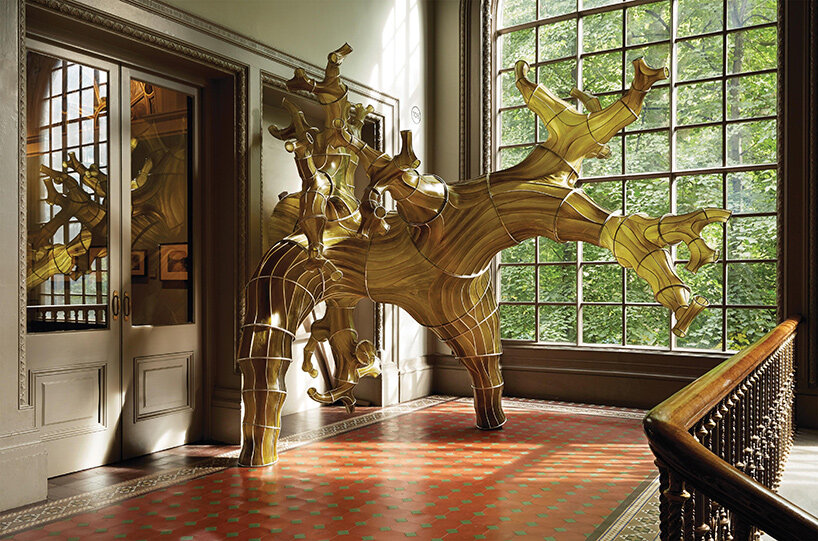
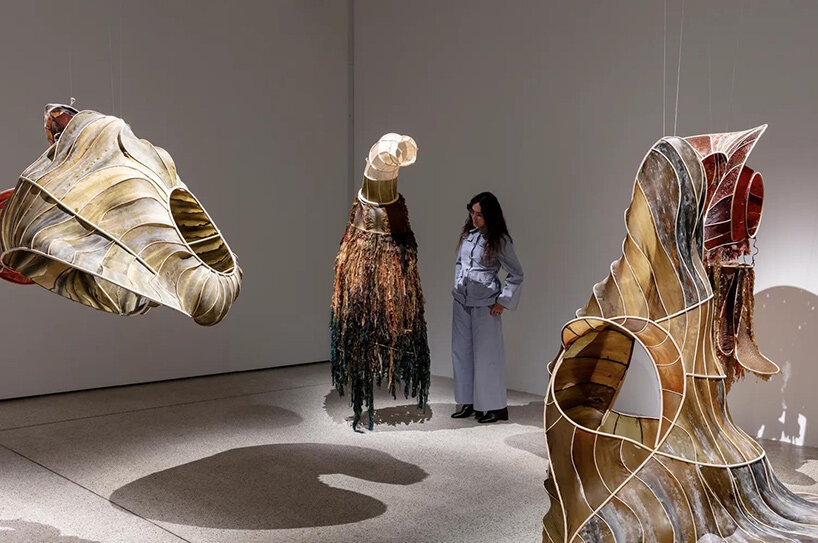
At London’s Design Museum, German-born designer Julia Lohmann arranged five towering kelp sculptures in a circle for the 2025 exhibition More than Human. Their translucent skins stretch across ribbed frameworks, resembling unfamiliar creatures brought up from the ocean floor. Titled Kelp Council, the installation imagines a gathering of marine organisms discussing the condition of their environment, with visitors invited to join the conversation.
As designers increasingly turn to seaweed as an alternative to conventional materials, Lohmann raises a question about the ecosystems supplying them. What happens when a natural resource becomes the focus of growing industrial demand? Through her sculptures and material experiments, she considers how design might work with nature while accounting for the living systems behind its materials.
from animal bodies to natural materials
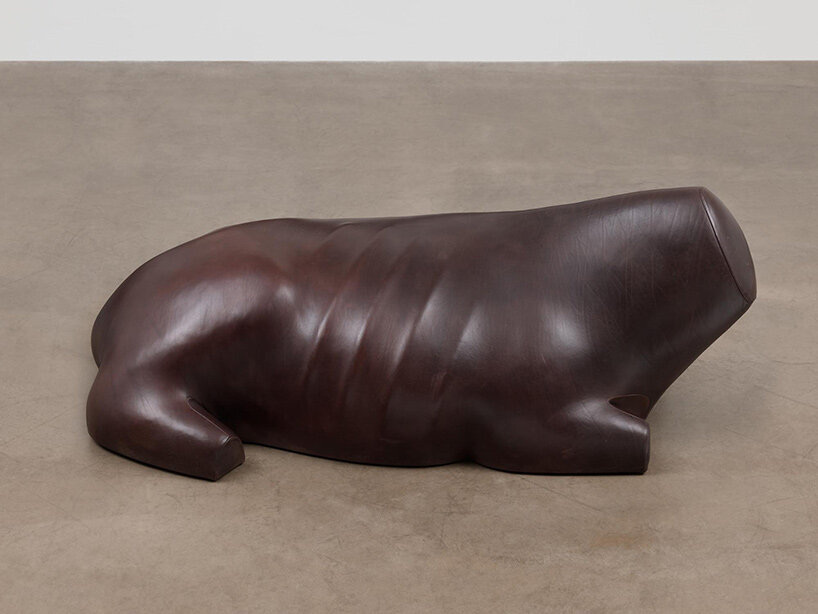
Julia Lohmann’s interest in the origins of everyday materials began long before her experiments with seaweed. In 2004, she created Waltraud Cow-Bench, a leather-covered piece of furniture shaped to resemble a reclining cow. By returning the familiar material to the form of the animal it came from, she draws attention to a relationship that typically disappears during production.
This thinking eventually led her toward marine algae. During a 2013 residency at London’s Victoria and Albert Museum, she founded the Department of Seaweed, a collaborative research initiative exploring the properties of kelp and its potential applications in design. Working with scientists and other specialists, the designer began developing techniques that would allow the material’s natural characteristics to shape her sculptural forms.
when kelp shapes the structure
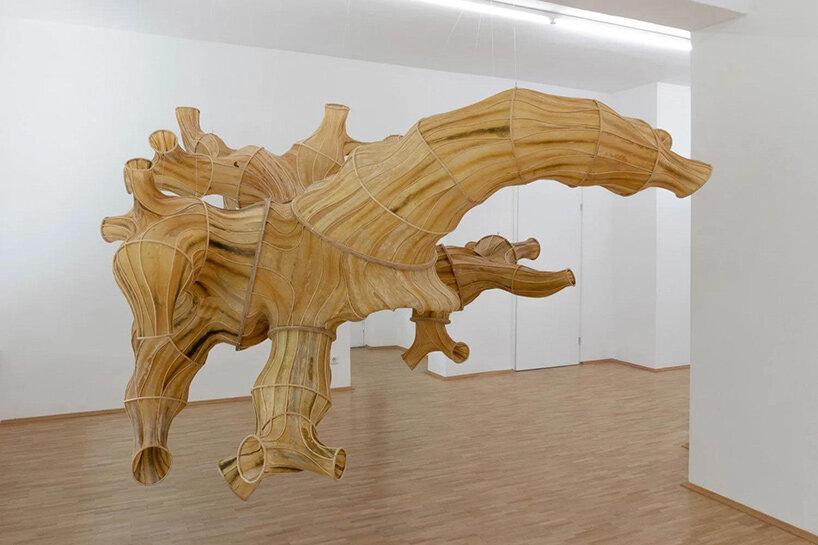
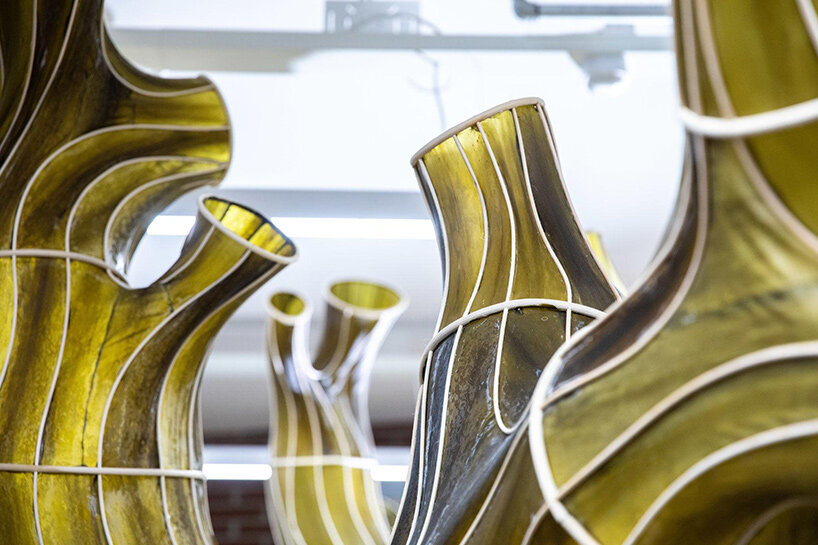
In Kombu Ahtola (2020), pieces of seaweed are stretched between the ribs of a rattan framework. As the kelp dries, it contracts, pulling the structure into its curved shape. The material helps determine the sculpture’s final geometry, introducing a degree of unpredictability into the making process.
Her Hidaka Ohmu pavilion, also presented in 2020, brings these experiments to an architectural scale. Measuring approximately six meters across, the structure is covered in translucent seaweed panels that filter light into its curved interior. Visitors can move through the installation, experiencing the unusual texture and physical presence of a material more commonly associated with the ocean.
designing with the needs of other species in mind
Kelp forests support complex marine ecosystems, providing habitats for numerous species. While seaweed offers promising possibilities for material development, expanding its cultivation and harvesting introduces ecological questions of its own. Lohmann’s research considers how these resources might be used while preserving the environments that sustain them.
Kelp Council brings this concern into a more speculative setting. By imagining marine organisms gathered around a discussion, Lohmann asks whose interests enter the decisions we make about natural resources. Her sculptures offer a physical expression of an idea that connects her early work with her ongoing seaweed research: that the future of sustainable design depends as much on how we obtain materials as on what we make from them.