opera reaches us before the screen does
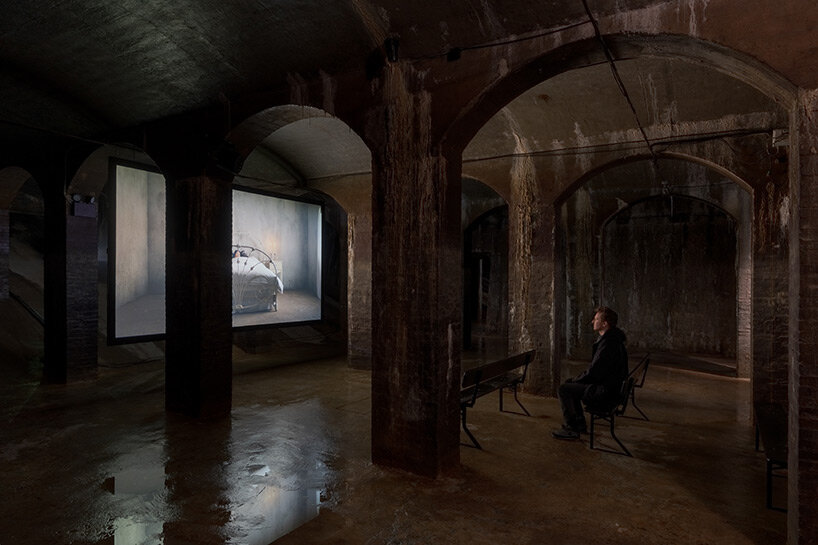
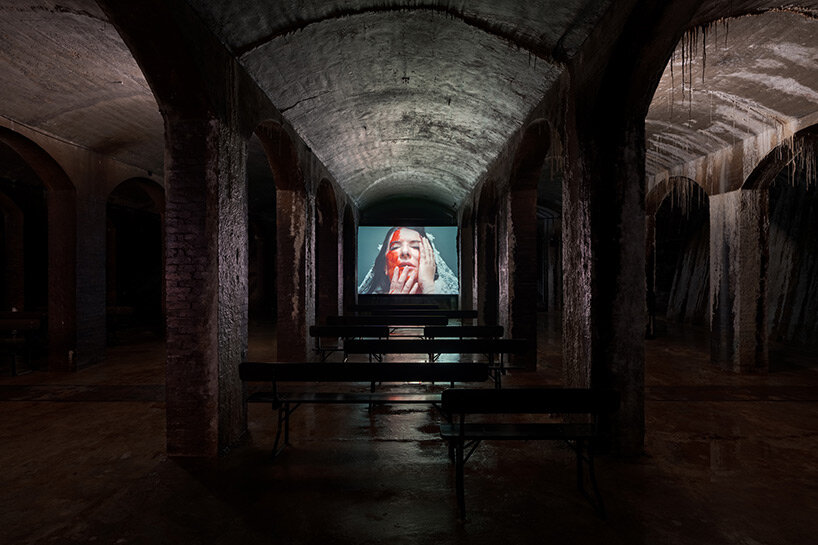
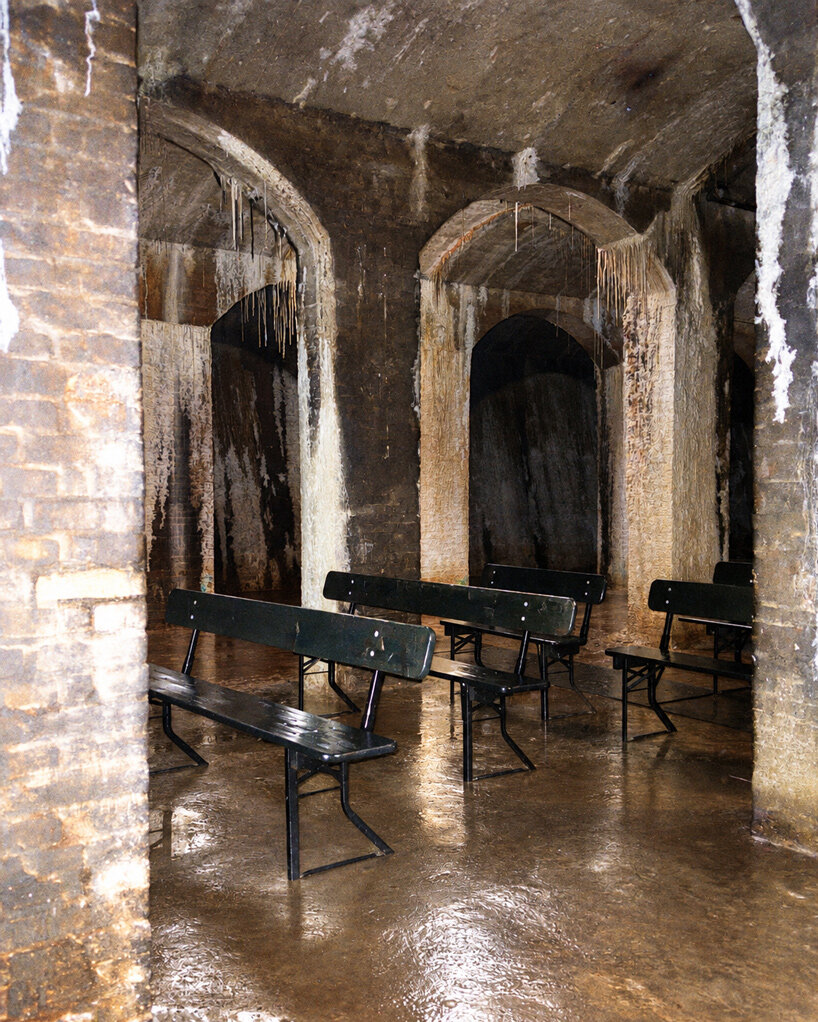
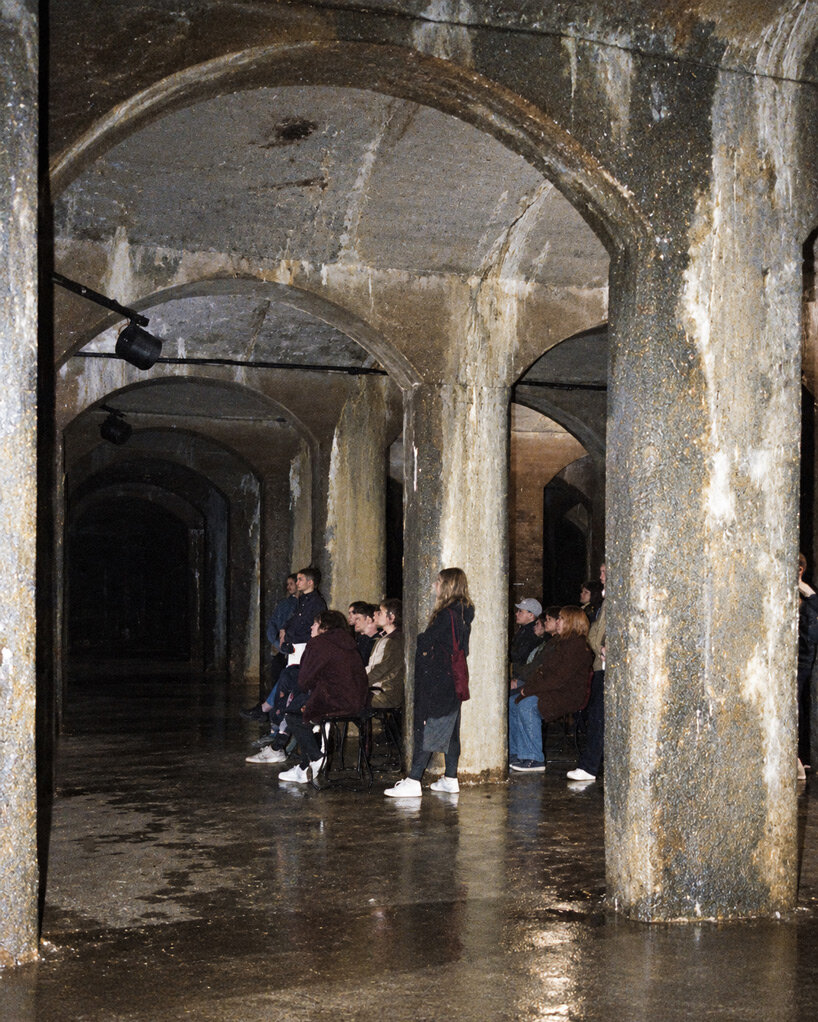
Beneath Copenhagen’s Søndermarken park, opera travels through the dark before we can locate its source. Water drips from overhead, and puddles catch what little light reaches the floor. A low rumble of music moves through the former reservoir at Cisternerne and spreads beyond the screen where it began. During our visit this spring, we could only make out portions of the dim space which sprawled into darkness before us. Small theater-like setups emerged from the shadows as we moved farther inside, each with seats facing a glowing screen.
Here, Marina Abramović’s Seven Deaths places the artist inside seven doomed female roles made famous by Maria Callas. The performance artist appears opposite actor Willem Dafoe in a series of short films, accompanied by recordings of the soprano’s voice. The installation takes about an hour to experience in full. Its subject is familiar to anyone who has sat through an opera: a woman dies, and an audience stays to watch. At Cisternerne, that audience has to keep moving and re-experiencing her death over again.
seven endings, one body
Here in Copenhagen, Marina Abramović draws from operas whose heroines meet very different ends. Violetta dies of tuberculosis in La traviata, while Tosca jumps to her death. Desdemona is killed by Otello; Carmen by Don José. Each has her own story, although Seven Deaths brings their fates together through a single body. Abramović dies onscreen, then returns in the next film to die again.
The films draw on these stories without reproducing their original staging. They give the deaths a cinematic scale, with the artist‘s body becoming the point around which each scene is constructed. The title has already told us where everything is headed. We watch for how it happens, and for how long the image allows it to happen. The slow pace gives us time to look, even when the action makes looking uncomfortable.
the audience moves together
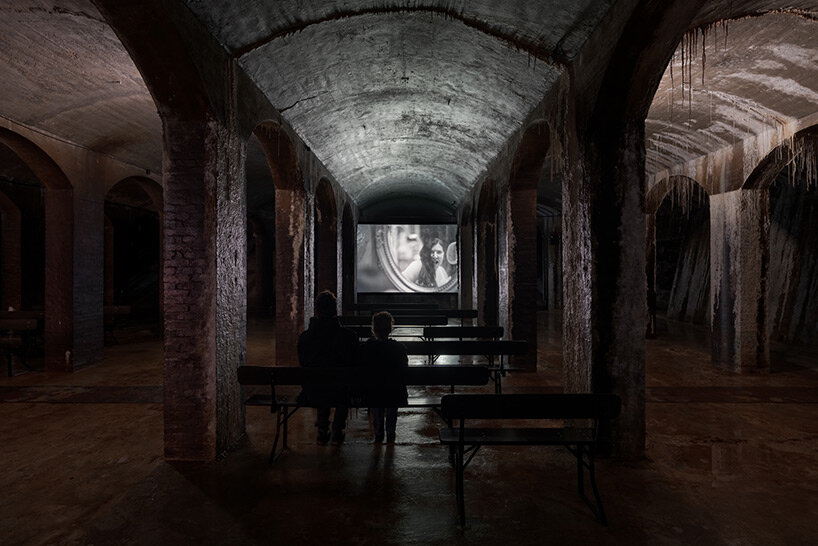
Only one film plays at a time, which gives Marina Abramović’s scattered theaters a shared rhythm. We join a small group already watching and take the available seats. When the short film ends, everyone rises. Low, echoing murmurs and the shuffle of feet replace the singing as the group moves quietly through the dark toward the next screen. For a few moments, watching becomes a practical exercise in finding somewhere to sit.
This repeated migration is a substantial part of the work at Cisternerne. In an opera house, the audience generally occupies the same seat while the scenery changes around the performers. Here, we change position between deaths. The darkness prevents an overall view of the installation, so each theater has to be found along the way. Sound reaches beyond those individual viewing areas, while the damp air and dripping water remain present through every scene. In this way, the room keeps intruding on the film.
a dying heroine still has a voice
Opera has long devoted some of its most memorable music to women approaching death. The plot brings a life toward its end while the singing gives that woman an extraordinary presence in the theater. Tosca’s ‘Vissi d’arte,’ sung before her final act, looks back on a life devoted to art and love. Listening means remaining with her, even when her fate is already known. The duration of the aria allows an audience to stay inside that feeling.
Seven Deaths separates the singing voice from the body we see. Abramović performs the deaths; Callas supplies the voice through recordings made during her lifetime. That separation becomes especially palpable underground, where the sound seems to occupy more space than the screen. Callas died in 1977, yet her singing continues to reach new listeners. As Abramović returns for another filmed death, the voice gives the sequence a continuity that the images repeatedly interrupt.