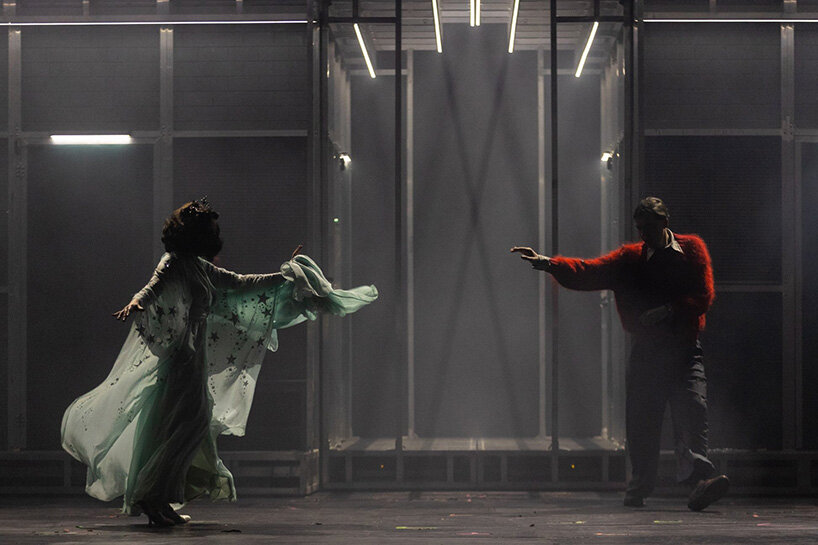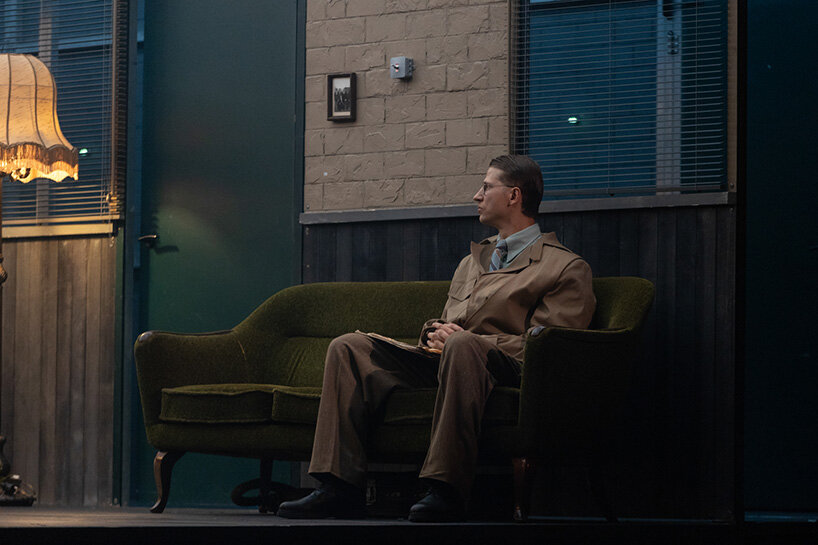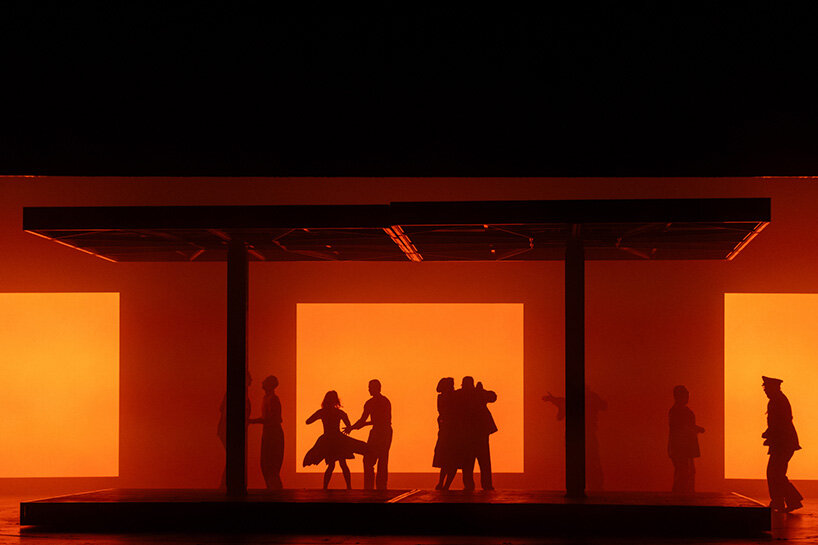
Łukasz Twarkowski merges theater and cinema onstage
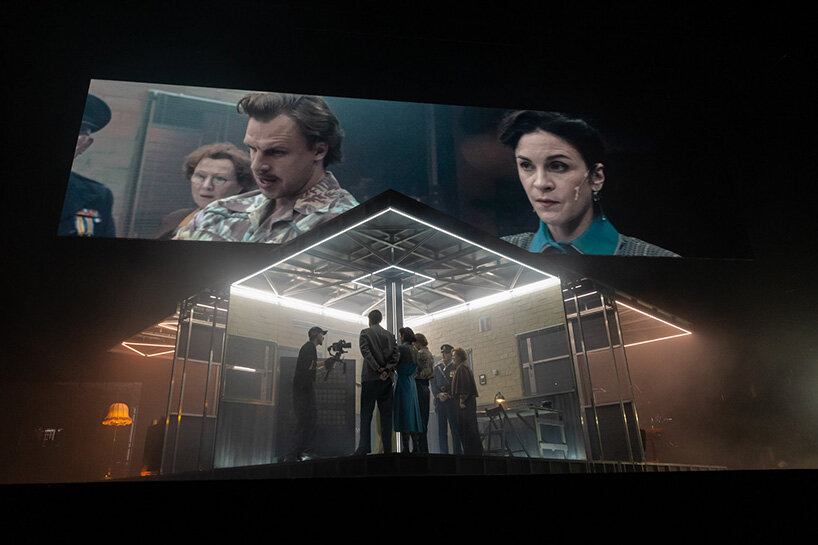
Before Oracle begins at Onassis Stegi in Athens, a camera captures the audience and projects its image onto a screen. Spectators appear as grainy black-and-white figures, their faces transformed into a strange, almost anonymous collective portrait. Those who have come to watch find themselves becoming the spectacle. It is an introduction to the work of Polish director Łukasz Twarkowski, in which live performance and cinema become inseparable. Twarkowski brings theater and cinema into a shared space, making the process of filming part of the performance. The stage divides horizontally into two visual fields: the live theatrical action unfolds below, while a screen above displays footage captured by cameras operating within the set in real time. The audience watches the actors perform while simultaneously observing how their movements are framed and transformed into cinematic images.
For the director, video is not just an addition to the performance. Theater and cinema happen at the same time, with cameras filming the actors live and projecting the footage onto a screen above the stage. The audience can watch the actors perform or follow the action through the camera, constantly switching between the two.
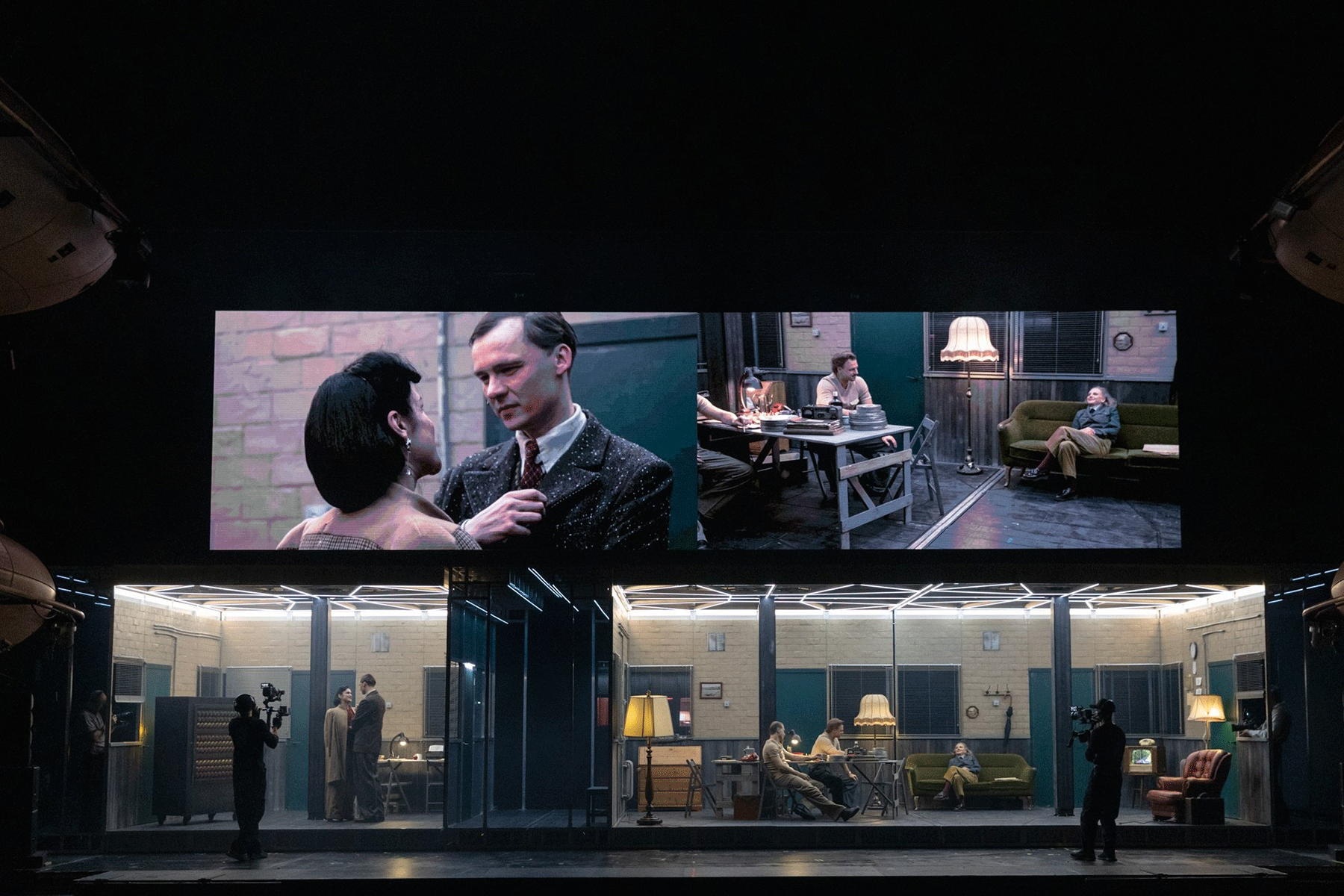
directing between the stage and the screen
For most of the three-hour-and-40-minute performance, the filming process remains visible to the audience. Camera operators move within the set, framing actors whose actions are simultaneously experienced in the theater and on screen. The projected images offer close-ups and carefully composed perspectives, while the stage reveals the bodies, movements, and technical decisions behind them. The audience is free to move between these viewpoints, but neither provides a complete account of the event. The screen can draw attention away from the physical stage, offering a familiar way of experiencing a narrative through selected frames. Yet looking away from the screen reveals another performance unfolding around the act of filming itself. Twarkowski makes this competition for the audience’s attention part of the experience, exposing how easily the mediated image can take precedence over the reality it represents.
a recurring approach to theatrical illusion
The set is made up of separate modules, each built around a corner with walls and a ceiling. The units can be joined in different combinations, either in pairs or around the center of the stage, creating a range of spatial arrangements. Depending on how they connect and rotate, they can form enclosed rooms, corridors, or a series of open frames that suggest a street or a cluster of buildings.
The lighting further changes how these spaces are perceived, shifting their atmosphere from one scene to the next. The production rearranges the same elements to create different environments and conditions for the action. The transformations remain visible, making the changing structure an active part of the performance.
the spectacle of watching
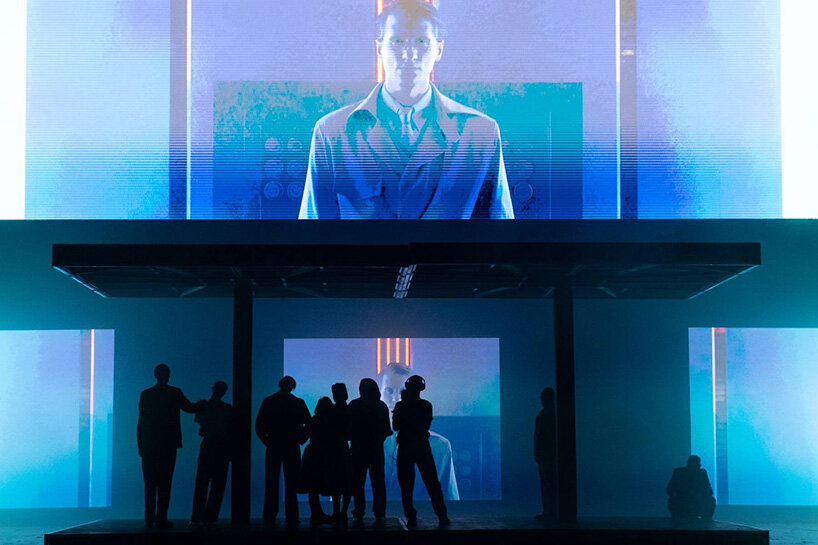
What makes Twarkowski’s approach relevant beyond the theater is its engagement with a culture increasingly organized around screens, live images, and mediated experiences. In ORACLE, the audience is first transformed into an image and then invited to watch performers undergo the same process. The camera becomes both a tool for revealing detail and an instrument that determines what can be seen.
The subject of the production, which moves between Alan Turing, the history of computing, and the emergence of artificial intelligence, adds another dimension to this inquiry. Its use of thermal and infrared imaging evokes technologies associated with surveillance and military applications, complicating the assumption that images provide neutral access to reality. What appears on screen is always shaped by a system of interpretation.
Twarkowski uses the resources of contemporary theater to examine how images are constructed and how audiences respond to them. His work suggests that spectacle lies in the systems that organize attention, mediate experience, and determine what becomes visible.