
A fresh outbreak of mpox in Guinea Bissau – the country’s first – means the virus formerly known as monkey pox is back in the headlines. So what has changed?
Since 2022, there have been almost 190,000 lab-confirmed cases of mpox reported worldwide in 145 countries. Before then, outbreaks of mpox tended to be relatively small and in a handful of African countries, where the viral infection was known to be endemic.
What is mpox?
Mpox is an infectious disease that typically starts with flu-like symptoms, including fever, chills and aching muscles. These are followed by a distinctive rash, beginning as raised spots that turn into blisters filled with fluid before forming scabs.
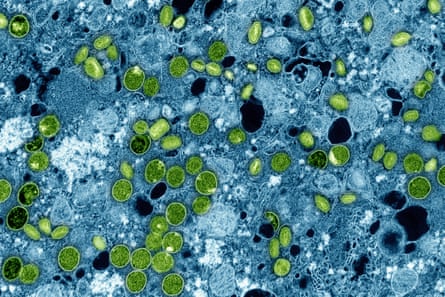
It used to be called monkeypox, because the virus was first discovered in captive monkeys in 1958. But during an international outbreak in 2022, there were concerns that the name was fuelling racist and stigmatising language on and offline, prompting the World Health Organization (WHO) to recommend changing it to mpox.
It is endemic to many parts of Africa, with outbreaks historically starting when people ate meat from infected wild animals. But in recent years it has spread beyond the usual areas, with sustained chains of human-to-human transmission. The Atlanta-based Centers for Disease Control and Prevention said this month that mpox was on course to become endemic in the US.
Why is it spreading to new countries?
There are, broadly, two types of mpox, known as “clades”. Clade I was once called the “Congo Basin clade” and clade II the “West African clade”.
The latter sparked a major global outbreak in 2022 when it appeared to undergo some changes that allowed it to spread more efficiently from person to person. It is passed on via close contact – in that outbreak, mostly by sexual contact, with men who have sex with men at the highest risk.
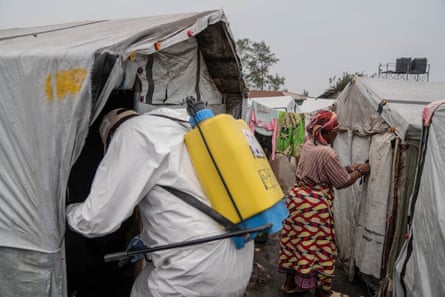
In June 2024, researchers raised the alarm about a new variant of clade I in the Democratic Republic of the Congo (DRC), which also appeared to be spreading more easily between people. That grew into another major international outbreak, which was declared a public health emergency of international concern by the WHO on 14 August 2024.
“Emergence of mpox in more countries in west Africa is to be expected,” said Prof Michael Marks, of the London School of Hygiene & Tropical Medicine and University College London hospital. “Mpox outbreaks have now been declared in a number of countries in the region, including Guinea and Sierra Leone within the last 12 months.
“Mpox spreads by close physical contact. This makes it suitable to spread in a variety of different contexts, such as in close sexual networks, as was seen during the 2022 global pandemic, or areas where many people are living closely together such as settings with refugees and internally displaced people, as was seen in the DRC outbreak over the last few years,” Marks said.
What happened to those two big outbreaks?
The 2022 outbreak was declared a public health emergency in July that year. After contact-tracing and mass vaccination programmes, the status was lifted in May 2023. There had been about 90,000 infections.
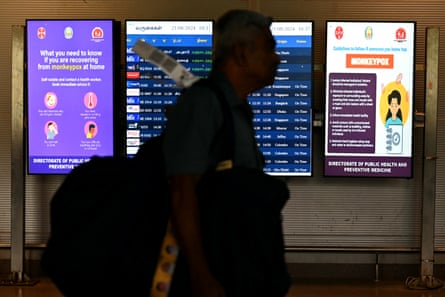
The 2024 outbreak had its international public health emergency status lifted in September 2025, not because the disease had disappeared but because numbers of cases and deaths were declining and officials felt the situation had become better controlled.
If genetic testing reveales a new variant, or surveillance suggested an outbreak was spreading particularly fast, making people particularly sick or proving more deadly, global health authorities would be likely to step in again.
How worrying is the new outbreak?
Cases had not been reported in Guinea Bissau before this outbreak. Unicef said it was concerned that of 46 suspected cases, 23 were children aged under 15 and most of those were aged under four.
“The concern about children is that they are at the highest risk of severe disease and death from mpox,” said Dr Aula Abbara, a senior lecturer at Imperial College London and adviser to Médecins Sans Frontières UK. “Young children can become much sicker than healthy adults.”
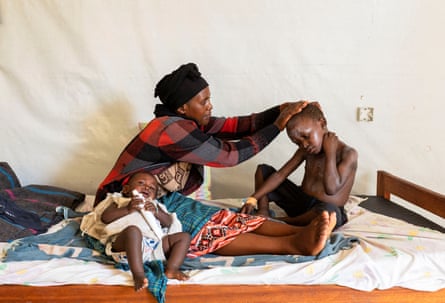
However, she cautioned that the apparent over-representation of children in the outbreak data should be interpreted carefully. She said: “There may also be some bias in the data. Families are often more likely to seek healthcare for a sick child than for an adult, particularly in a resource-constrained setting with a fragile health system, such as Guinea-Bissau.”
Marks added: “Children have close physical contact with their parents and with each other, and in settings such as Guinea-Bissau are often living in cramped conditions, which make close physical contact and transmission more likely.”
Confirmed cases do not appear linked to each other, which suggests the virus is circulating more widely in the community and there are unidentified cases.
Are there vaccines and treatments?
The WHO recommends two vaccines, which can be given to people at high risk or offered to people who have been in contact with a known case to prevent further spread. The question is where they are available.
Marks said: “The major challenge remains that supplies of vaccines are best in high-income countries but worst in low-income settings, where the need and conditions for mpox transmission are highest.”
A new global stockpile is due to be launched within weeks, which should mean vaccines can be deployed more rapidly to quell outbreaks. Officials also hope it will allow manufacturers to plan ahead and produce more of the jabs by providing a clear, concrete demand.
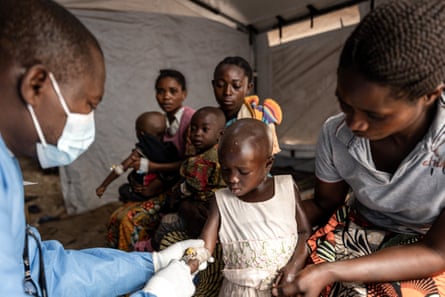
An antiviral called tecovirimat did not appear any better than a placebo when tested on patients with mpox clade I in the DRC, although the question of whether it might help some immunocompromised patients – such as those living with HIV – remains open. That trial did show, however, that giving patients good, supportive care dramatically improved their chances of survival.
While vaccines remained an important tool for outbreak control, basic supportive care could be lifesaving, Abbara said. She added that strengthening surveillance, testing, contact tracing and broader public health measures would be critical to understanding and containing the outbreak.
“Vaccines are important, but outbreaks are not controlled by vaccines alone,” she said. “Early detection, contact tracing, supportive care and strong public health surveillance remain absolutely essential.”