
a silver skin takes over a building in são paulo
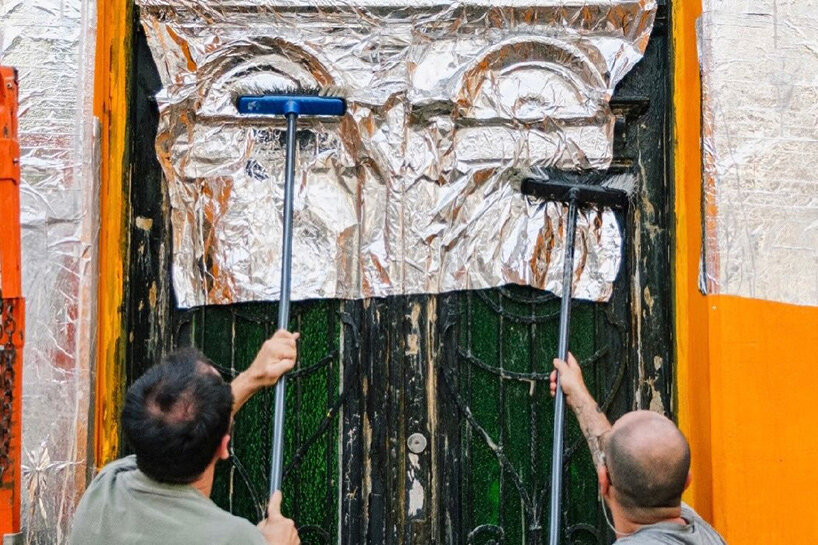
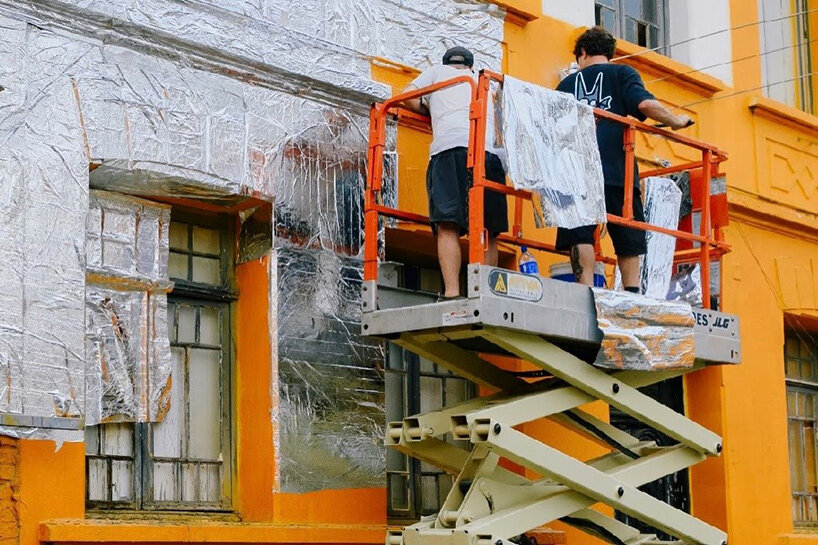
Portuguese artist Vhils (Alexandre Farto) and Brazilian artist Marcelo Cidade have wrapped the facade of an old building in São Paulo with reflective silver thermal sheets. Titled 2878, after its address on Rua Cardeal Arcoverde in the Pinheiros neighborhood, the intervention gives the historic structure a metallic new appearance. Its original architectural features are expressed beneath the covering, while the silver surface catches the changing light of the street.
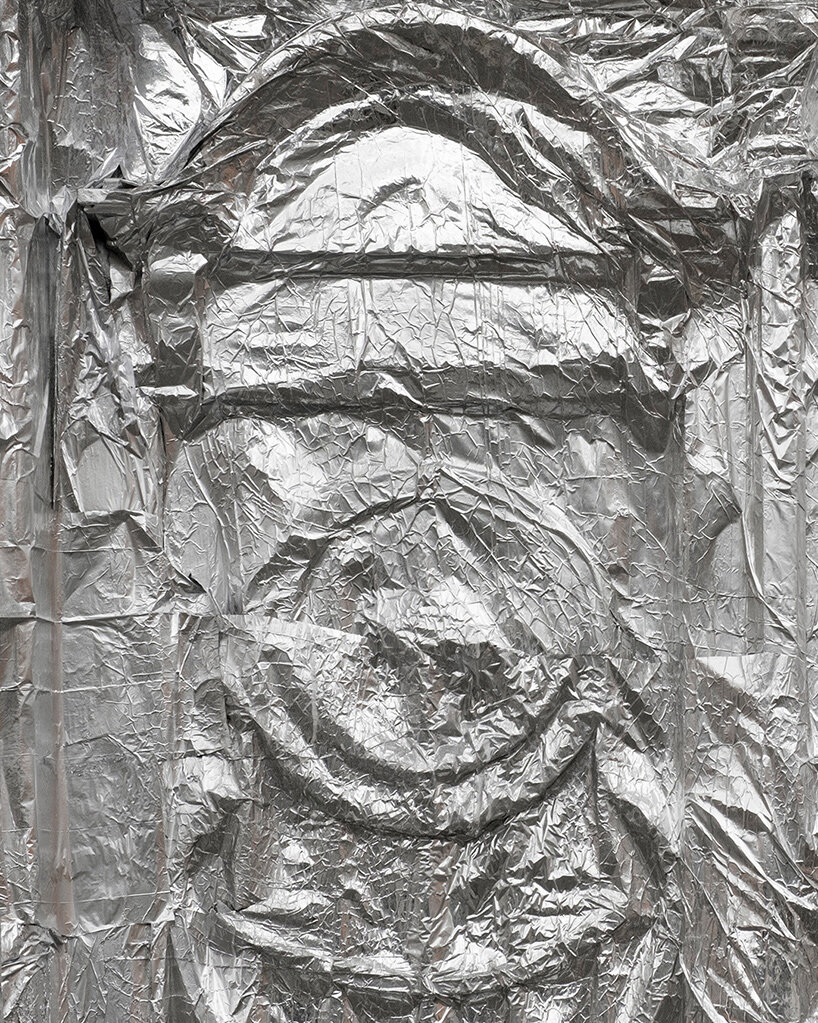
The artists have applied individual sheets of thermal material directly to the facade using a simple adhesive made from cornstarch. The lightweight covering follows the contours of the existing architecture, picking out its openings and decorative details. Depending on the angle of the sunlight, the building appears to glow against its surroundings or reflect them back in fragmented patches. The public artwork plays with this shifting visibility to draw attention to an address that would have otherwise likely blended into the streetscape.
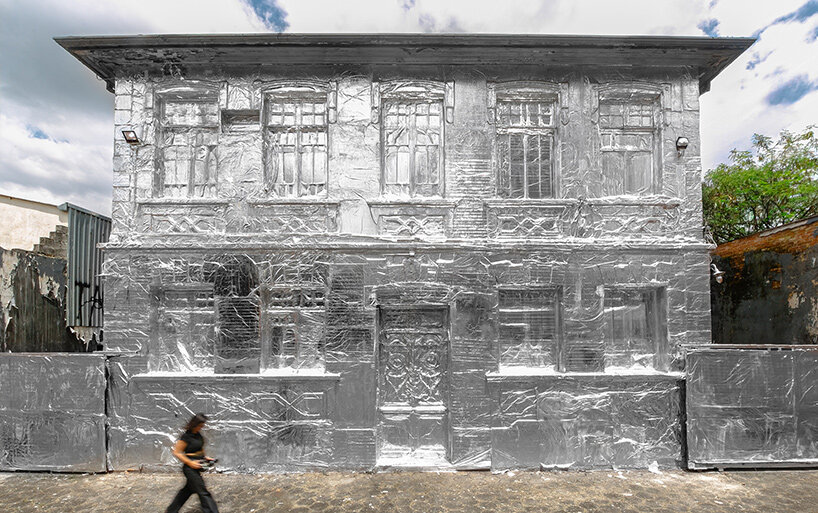
a former public health building with a layered history
The building itself has an interesting past. Records dating back to 1945 identify the property as the site of a tuberculosis dispensary operated by São Paulo’s public health authorities. A government decree from 1953 further documents its use for the Pinheiros dispensary, while more recent records identify it as a former home of SUCEN, the state’s agency for controlling endemic diseases.
The structure has remained on the same street for decades, and has passed through different uses as the neighborhood has changed around it. By temporarily concealing its original surfaces, Vhils and Cidade bring its architecture back into public view. Their intervention considers how familiar buildings can gradually fade from a city’s collective awareness, even while continuing to occupy a prominent place in the urban landscape.
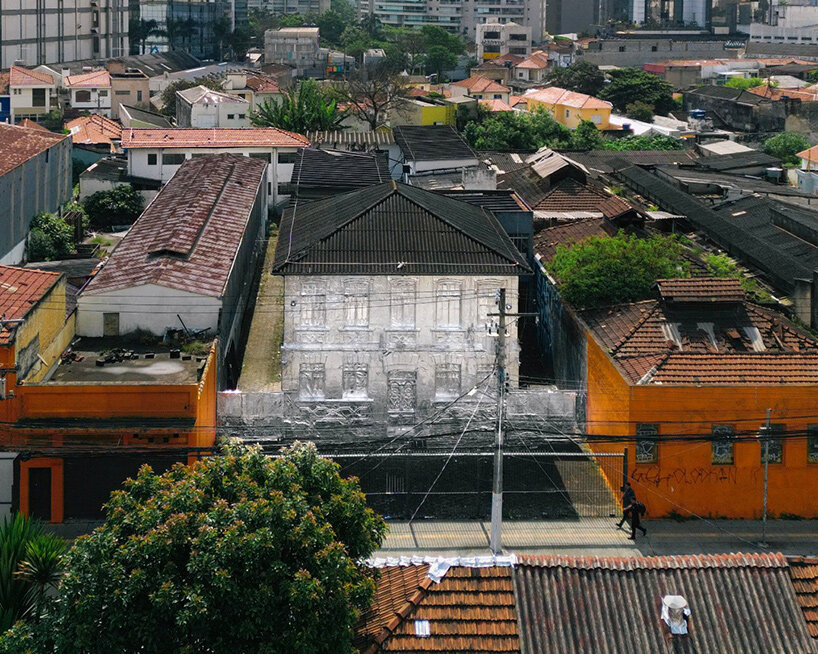
vhils and marcelo cidade explore the disappearing city
The project marks the first collaboration between the two artists, whose practices have long engaged with the built environment. Vhils is widely recognized for his portraits carved directly into urban walls, where removing layers of plaster and concrete reveals images beneath the surface. Cidade often works with architectural elements and materials drawn from the street, and examines how buildings shape people’s relationships with public space.
The silver sheeting recalls a protective thermal blanket which suggests an attempt to both preserve the building and obscure its original character. This tension is central to the work. The reflective facade can make the architecture unusually conspicuous, while its shifting surface also allows the building to visually dissolve into the city around it.
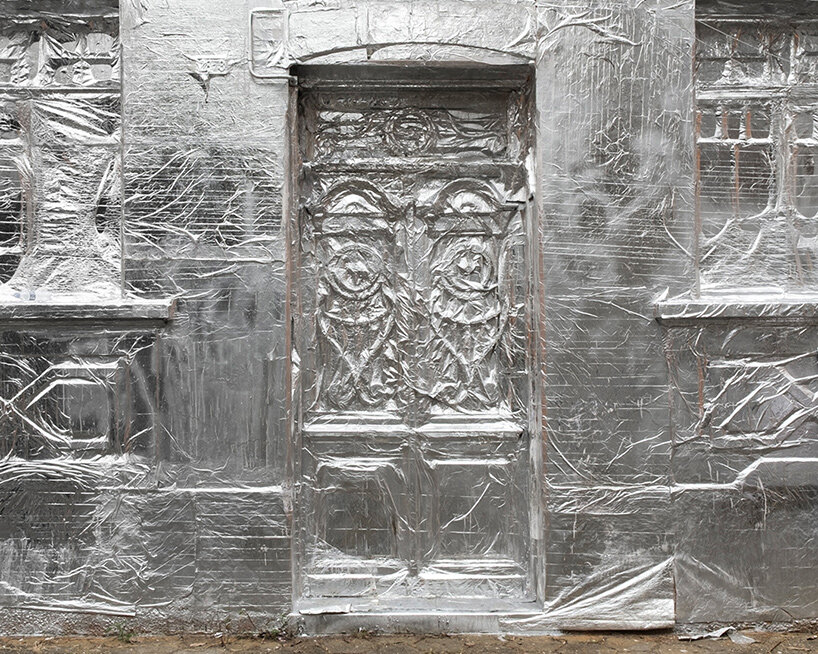
extending the exhibition into the streets of são paulo
The installation arrives alongside Vhils’ exhibition ATRITO: Arqueologia do Presente (Friction: Archaeology of the Present), which opened at Galleria Continua in São Paulo on November 14th, 2026. Curated by Ana Carolina Ralston, the exhibition explores the physical traces left by urban transformation.
Among its central works are fourteen corroded metal cubes arranged as a labyrinth, their surfaces marked with fragments of portraits and signage drawn from cities around the world. Vhils has also created a separate large-scale intervention across the gallery’s glass facade.
Outside the gallery, 2878 brings these ideas directly into the neighborhood. The choice of an existing building, along with the inexpensive materials used to cover it, gives the installation an immediate relationship with the street. For a time, the familiar address becomes a reflective landmark, its architectural details newly apparent beneath the silver covering.
project info:
name: 2878
artists: Vhils (Alexandre Farto) | @vhils, Marcelo Cidade | @cidade
location: Rua Cardeal Arcoverde 2878, Pinheiros, São Paulo, Brazil
related exhibition: ATRITO: Arqueologia do Presente
gallery: Galleria Continua
year: 2026
photographer: © Henrique Cabral | @cabrauu