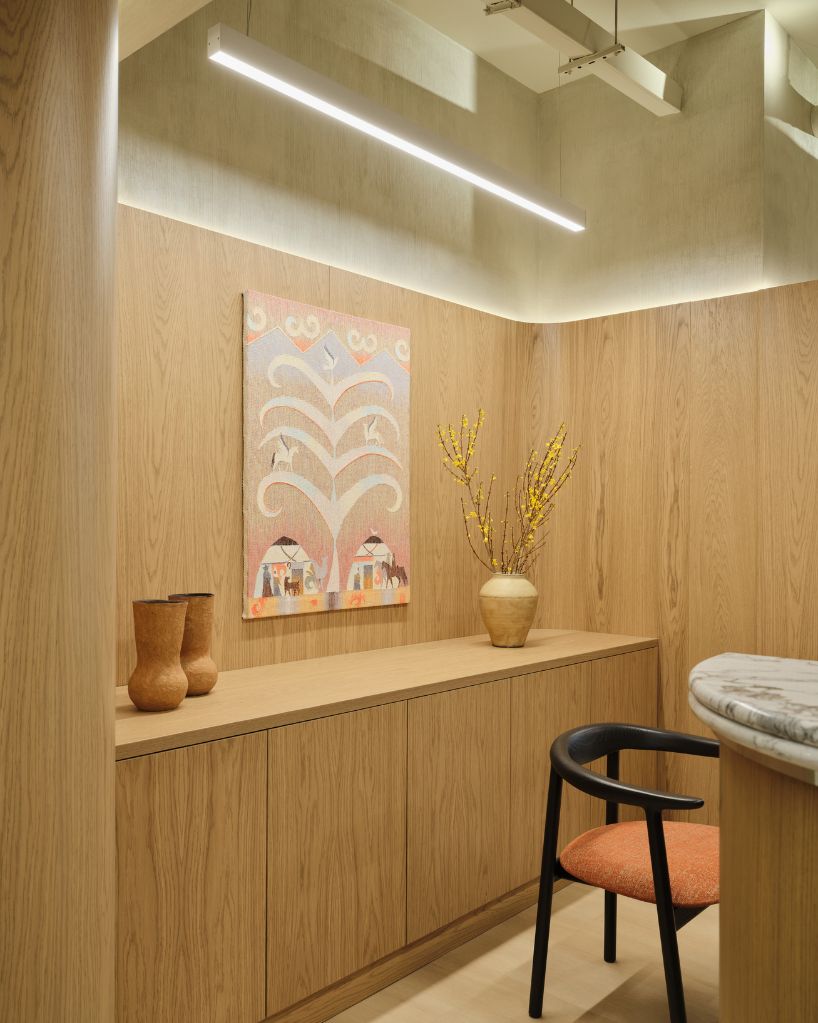
LINE ARC develops HOSPITALITY-INFUSED ESENTAI OFFICES in ALMATY
Completed in 2025 within the Esentai Apartments complex in Almaty, Kazakhstan, Esentai Offices is a 984.91-sqm workplace designed by Line Arc under the direction of principal designer Ilnara Seitzhanova. Moving away from conventional corporate layouts, the single-level plan integrates hospitality-driven interiors, flexible coworking zones, and regional craftsmanship.
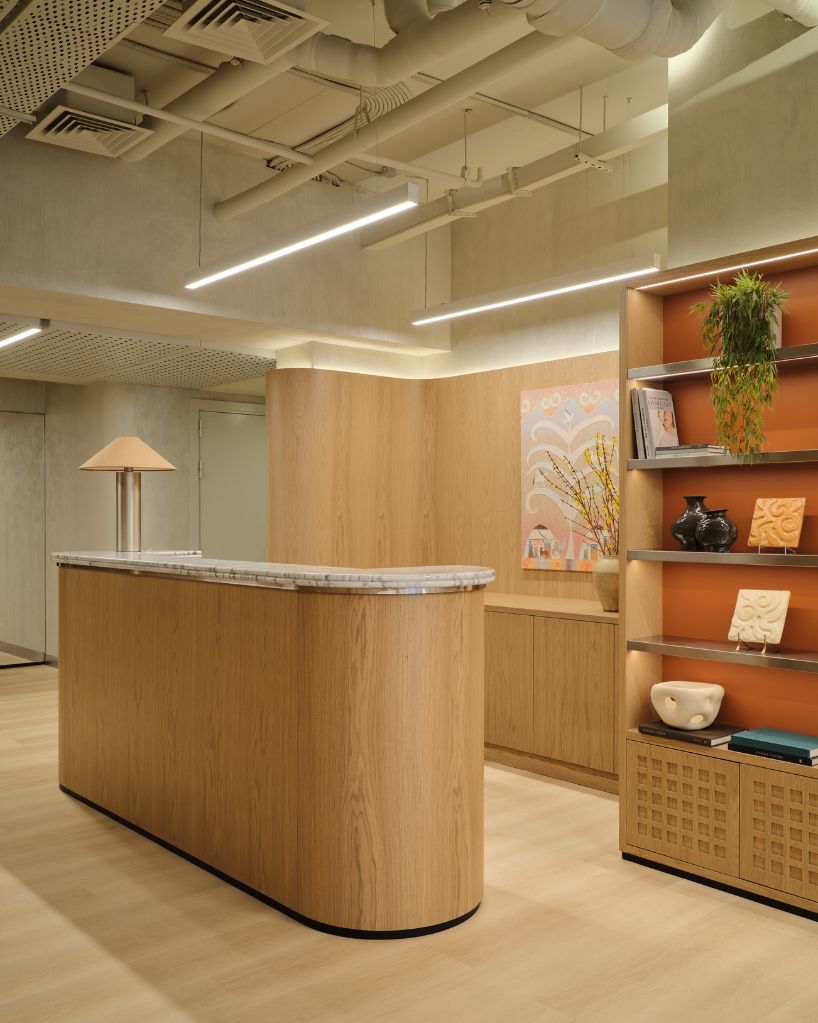
RE-ENGINEERED framework FREES PLAN FOR PUBLIC AND PRIVATE ZONES
Before addressing finishes, the design team selectively demolished and re-engineered dense overhead MEP infrastructure and an existing water-based fire suppression network to preserve ceiling heights. Integrated lighting systems by Aledo and Flua were paired with zoned HVAC distribution to maintain uniform air exchange and tailored illumination. Spatially, the floor plan separates public amenities from private workspaces: the communal zone comprises an entrance lobby, lounges, a central café with a back-of-house kitchen, a 40-seat auditorium, modular conference rooms, a speaker tribune, recreation areas, and a sleep capsule. In contrast, the private wing houses scalable suites accommodating two to 23 workstations, executive offices, print hubs, and kitchenettes, bordered by integrated indoor greenhouses and outdoor terraces.
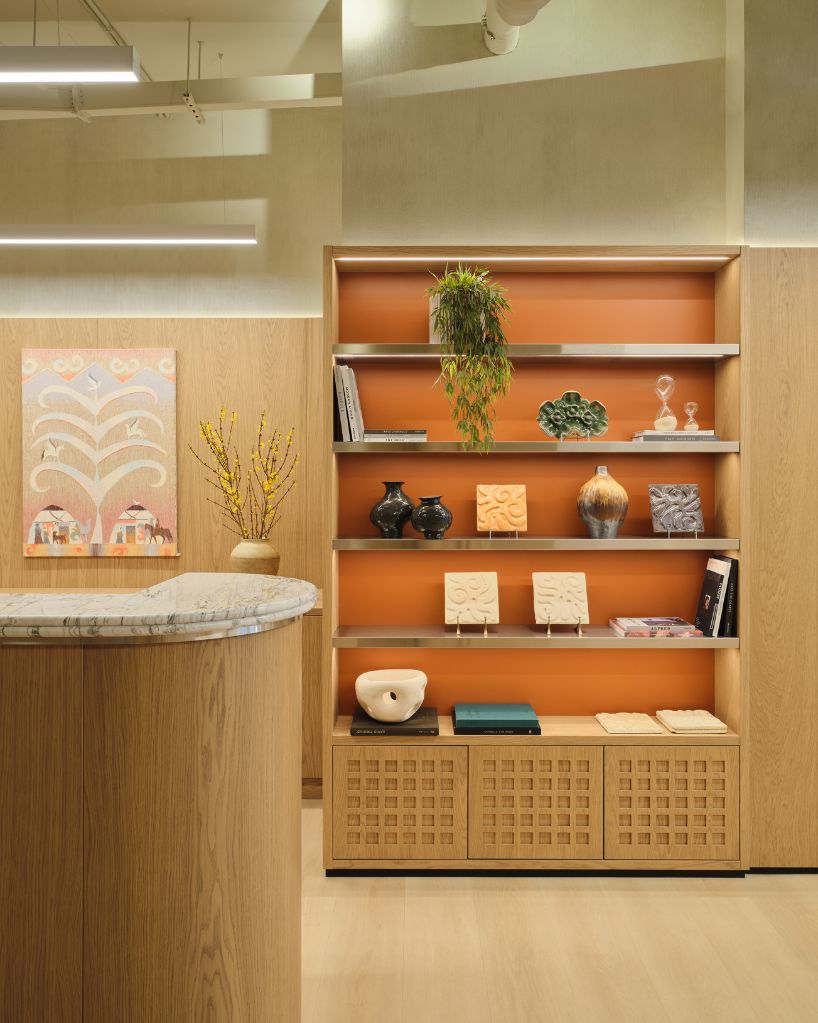
BOTANICAL PALETTES and CERAMIC SCONCES REFERENCE KAZAKH CRAFT
The material palette draws its chromatic cues from botanical Italian wall coverings in the lounge, establishing a muted register of terracotta, olive, pastel blue, and sand. Vertical decorative plaster by Gris Design forms a textured perimeter, paired with 1524×228 mm Enviro quartz-vinyl planks in main circulation routes and acoustic carpeting by Bloq and Clerkenwell inside meeting rooms. Kazakh cultural references are integrated through contemporary craft rather than literal motifs, including hand-molded ceramic sconces by local artisans, regional desk seating shaped after the silhouette of the traditional dombra and upholstered in Italian textiles, a felt wall installation by Laila Zharkyn, and original tapestries by Malik Mukanov.